With 10-inch display, deep AI integration, new device marks Samsung’s most ambitious hardware leap in years — arriving ahead of Apple’s imminent foldable debut
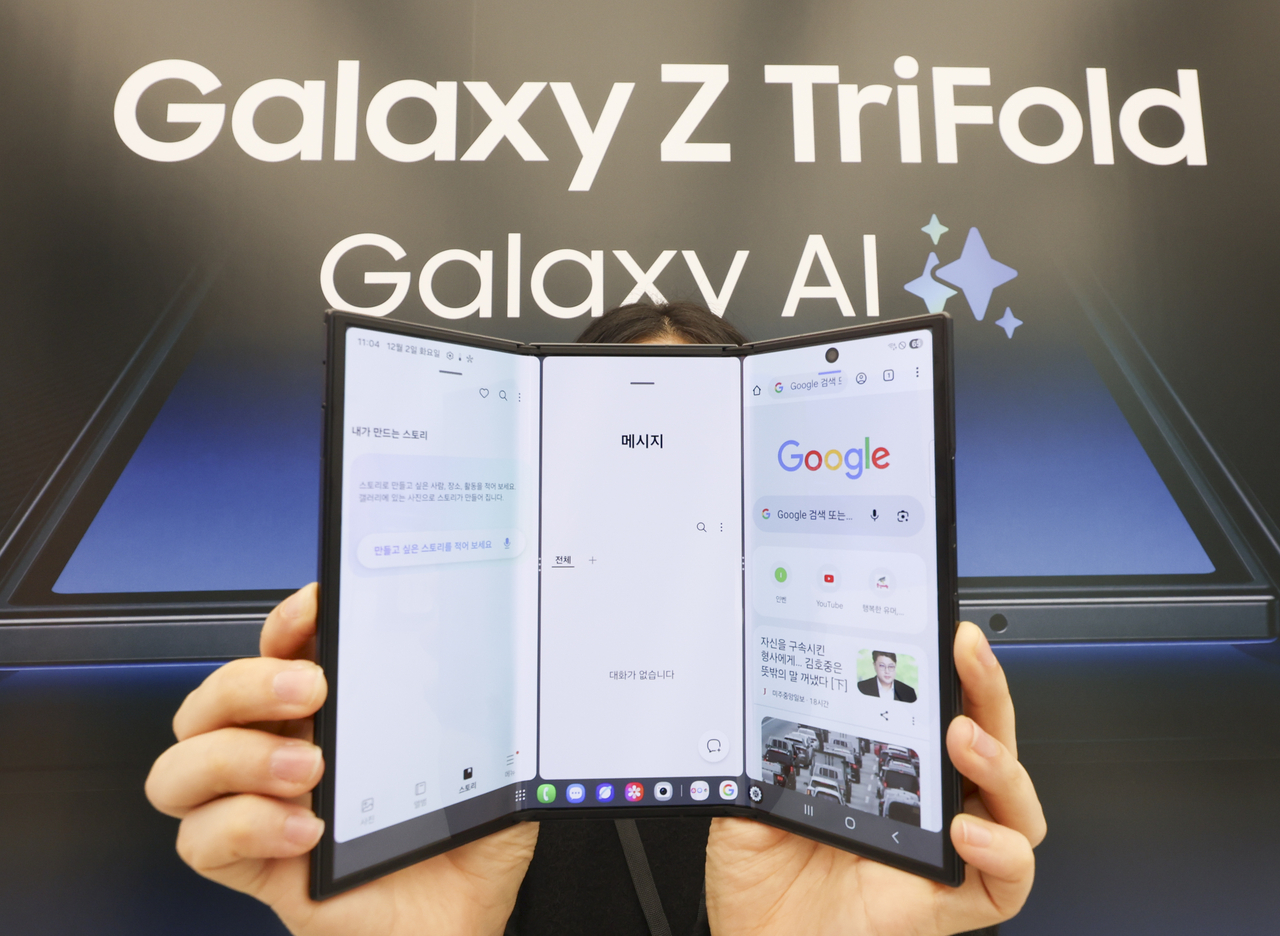
Samsung Electronics on Tuesday unveiled the Galaxy Z TriFold, its most ambitious entry yet in the foldables category — a device the tech giant hopes will reinvigorate a global smartphone market weighed down by stagnant demand and limited innovation.
At a press event in Seoul, Lim Sung-taek, Samsung’s vice president of domestic sales, described the TriFold as “the most advanced and innovative product the company has ever created,” positioning it as a demonstration of Samsung’s engineering leadership.
“This device will reshape the user experience,” Lim said. “Once you try it, you’ll understand how transformative a new form factor can be.”
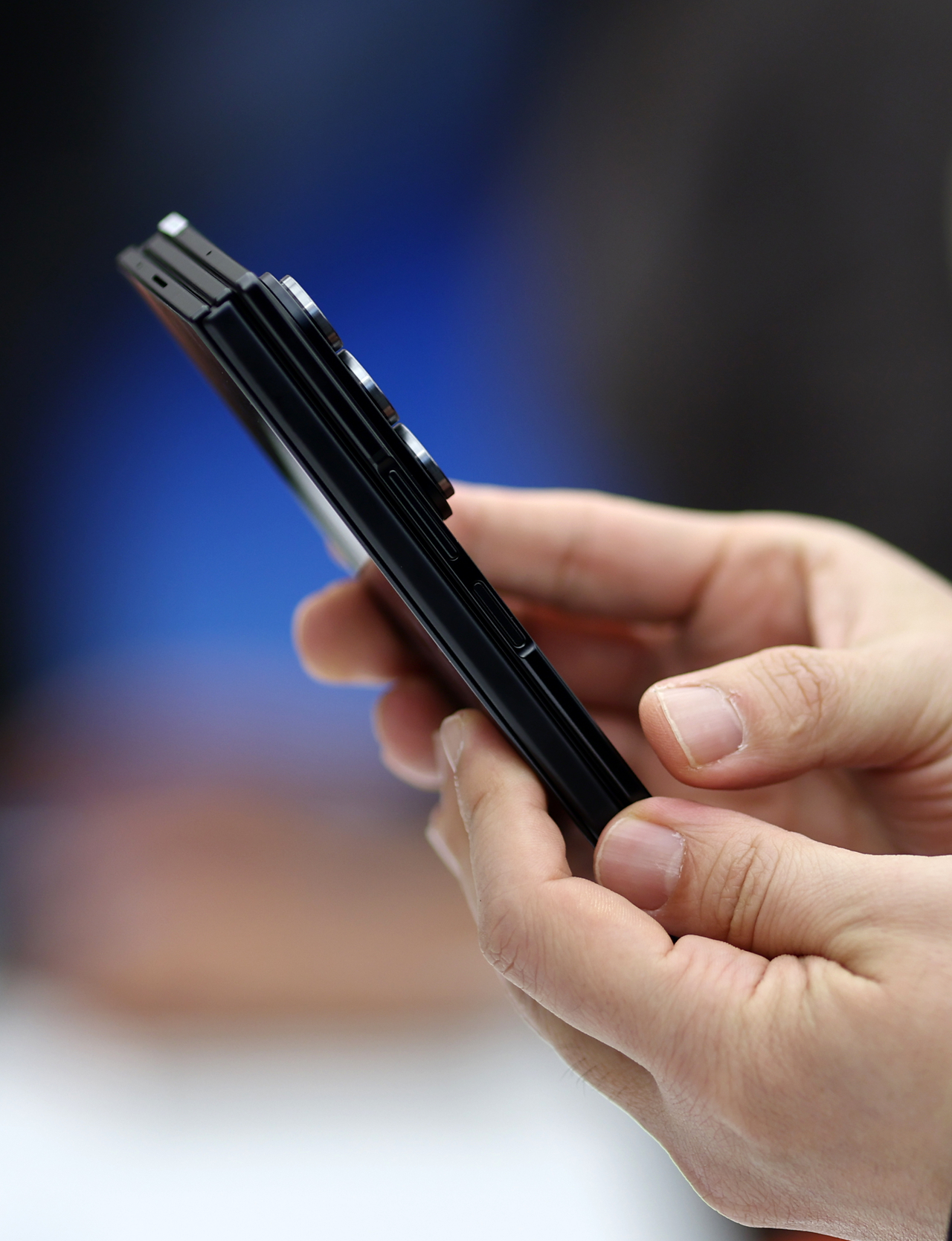
Samsung’s latest foldable introduces a dual in-folding mechanism that expands into a 10-inch tablet-style display and collapses into a 6.5-inch smartphone — matching the front-screen size of the Galaxy Z Fold 7. Despite its large unfolded footprint, the TriFold maintains a remarkably slim silhouette: 12.9 millimeters when folded and just 3.9 millimeters at its thinnest point when opened. It weighs 309 grams.
Durability features have also been overhauled. The device includes real-time vibration alerts and on-screen warnings to detect abnormal folding patterns. A newly engineered Armor Flex Hinge — designed solely for multifold operation — blends titanium in the hinge housing with armor aluminum in the frame to boost structural strength. The front panel is covered with Corning Gorilla Glass Victus 2, while the back uses a custom fiberglass composite that reduces weight without compromising rigidity.
The hardware package centers on Qualcomm’s Snapdragon 8 Elite Mobile Platform, a 200-megapixel wide-angle rear camera and a 5,600 mAh triple-cell battery — the largest ever in a Samsung foldable — with support for 45-watt fast charging.
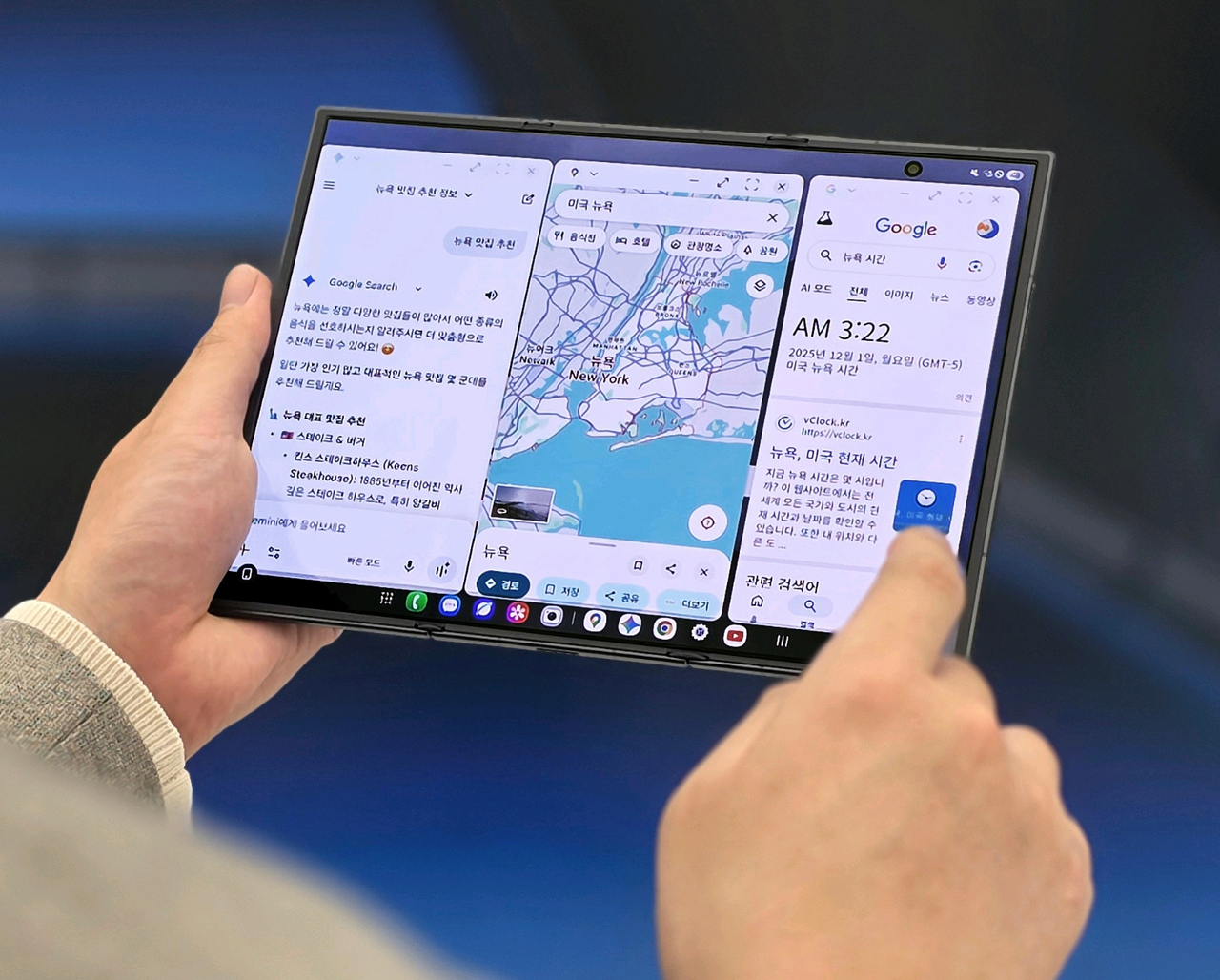
Samsung is pitching productivity as a core differentiator. The upgraded Multi-Window UI lets users run up to three apps simultaneously, while a tablet-optimized version of Samsung DeX — appearing for the first time on a Galaxy device — enables streamlined use with external displays, keyboards and mice.
AI integration has been expanded across the system. The TriFold debuts Gemini Live, a multimodal AI assistant that interacts with on-screen or camera-captured content in real time. The full suite of Galaxy AI features is embedded throughout the interface.
The device also supports dual-screen wireless display, allowing it to function as a secondary monitor — a feature aimed at heavy multitaskers and remote workers.
The Galaxy Z TriFold will debut in South Korea on Dec. 12, followed by launches in China, Taiwan, Singapore, the United Arab Emirates and the United States. Korean sales will proceed through Samsung’s online store and 20 designated retail outlets, with hands-on experience zones opening nationwide from Dec. 9.
Samsung will offer the TriFold in a single configuration — 16 gigabytes of RAM and 512GB of internal storage — with a black finish. It is priced at 3.59 million won ($2,445).
Although Huawei was technically the first to mass-produce a trifold smartphone, analysts note that US sanctions and the absence of Google’s Android ecosystem have sharply limited its global reach. Samsung’s model is therefore seen as the first trifold device positioned for broad international adoption.
The stakes are high. Market tracker TrendForce estimates global foldable shipments will reach 19.8 million units in 2025 — only 1.6 percent of total smartphone sales. Samsung’s share of the foldables market is projected to fall from 45.2 percent in 2024 to 35.4 percent this year, while Huawei’s is expected to climb to 34.3 percent. Other Chinese brands, including Oppo, Vivo, Lenovo and Honor, are also accelerating their foldables strategies.
Meanwhile, Apple is widely rumored to be preparing its first foldable iPhone, potentially launching as early as 2026.
“The TriFold will serve as a barometer for Samsung’s long-term strategy in foldables,” said an industry source who requested anonymity. “The price is undeniably high, but if Samsung proves it can deliver meaningful usability and durability, it could reset expectations for the entire market.”
yeeun@heraldcorp.com