Idol-turned-actor revisits role of heir pushed into business during 1997 Asian economic crisis — and traits he wishes he had at 25

Lee Jun-ho has had quite a ride living through 1997 — fumbling with pager messages, sporting old-school leather coats and keeping a small trading firm from falling apart through South Korea's worst financial crisis.
Not literally, of course. The 35-year-old actor was 7 during those years when the International Monetary Fund bailout gutted the South Korean economy.
For "Typhoon Family," the tvN period drama that wrapped its 16-episode run Sunday with a series-high 10.3 percent viewership, that is exactly what he did as lead character Kang Tae-poong, a flashy party boy forced to grow up fast when his father dies and leaves behind a floundering business.
"I kept thinking, if only I'd been like him in my 20s," Lee told reporters Tuesday at a cafe in Seongsu-dong, eastern Seoul. "Tae-poong is totally upfront about his feelings, doesn't hide anything, just barrels ahead. I spent my 20s being hard on myself, always trying to fix what I thought was lacking. He just goes for it."
That relentless self-scrutiny, though, is probably what got him here. Lee debuted in 2008 as a member of 2PM, the era-defining K-pop boy band. He was by no means the most visible member, always grinding on the sidelines, and spent years proving he could act. By now, he's rendered the "idol-turned-actor" label obsolete; He's a top star, full stop — and one of the country's most bankable.
Lee's turn as King Jeongjo in "The Red Sleeve" earned him the prize for best actor at the 2022 Baeksang Arts Awards — a first for anyone who came up through K-pop. "King the Land," where he starred opposite Lim Yoona, dominated Netflix's global charts in 2023. He's become the benchmark other idols-turned-actors were measured against, a success story in an industry where career pivots rarely work out.
After playing royalty and a chaebol heir, Lee wanted to shed the polish for "Typhoon Family."
Tae-poong starts the series as an "orange" — local slang for the flashy, free-spending youth who congregated in Apgujeong-dong, Seoul's main big money district, during the precrisis boom of the early 90s. He is the kind of guy who drives luxury cars, dances at nightclubs and has never worked a day in his life. Then the Asian Financial Crisis hits, his father passes and suddenly he is standing in an empty office with no employees, no inventory and creditors circling.
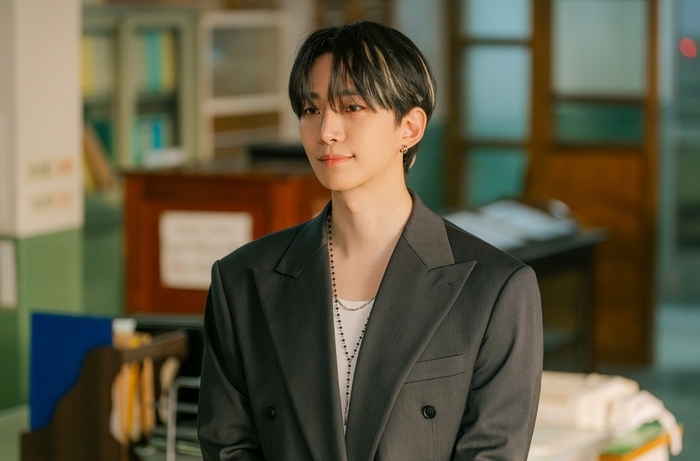
The show doubles as a time capsule for anyone who lived through those years or wondered what it felt like. The production team sourced vintage props from museums, hand-tailored period-accurate attire and even tracked down the original craftsperson who built the prop for a popular '90s variety show for a parody sequence. Lee did his own homework, too, studying top stars of the day for hairstyle references. For a scene homaging a sportswear commercial from the era, he learned the exact choreography from the original ad.
"If it's a full-on period piece set in ancient times, you've got entire sets built for you," Lee says. "But 1997 is too recent. We had to dress actual locations, calculate camera angles to avoid modern cars, even cover up the red safety markings on subway platforms that didn't exist back then. The crew put in serious hours."
The setting stirred up personal memories, too. Lee's parents both worked hard to make ends meet during those days. What he recalls, though, is not hardship; it is the tight-knit community that held things together. It is neighbors watching each other's kids, or a playground where someone was always around.
"People bonded without thinking twice about it," he says. "That warmth, that sense of getting through it together — that's what I hoped the show would bring across.
"When times are rough, you lean on the people around you. They're what get you through. I wanted viewers to feel that."
Not everyone bought into the execution. Some viewers found the 16-episode run sluggish. Others took issue with Moo Jin-sung's scheming rival businessperson — a figure who felt too cartoonish, too neatly villainous — against the realistic backdrop of genuine economic devastation. Though he acknowledged the criticism, Lee offered a defense.
"The team talked about this early on, that the financial crisis itself was the ultimate villain," he said. "We felt we needed someone concrete for audiences to direct their frustration at."
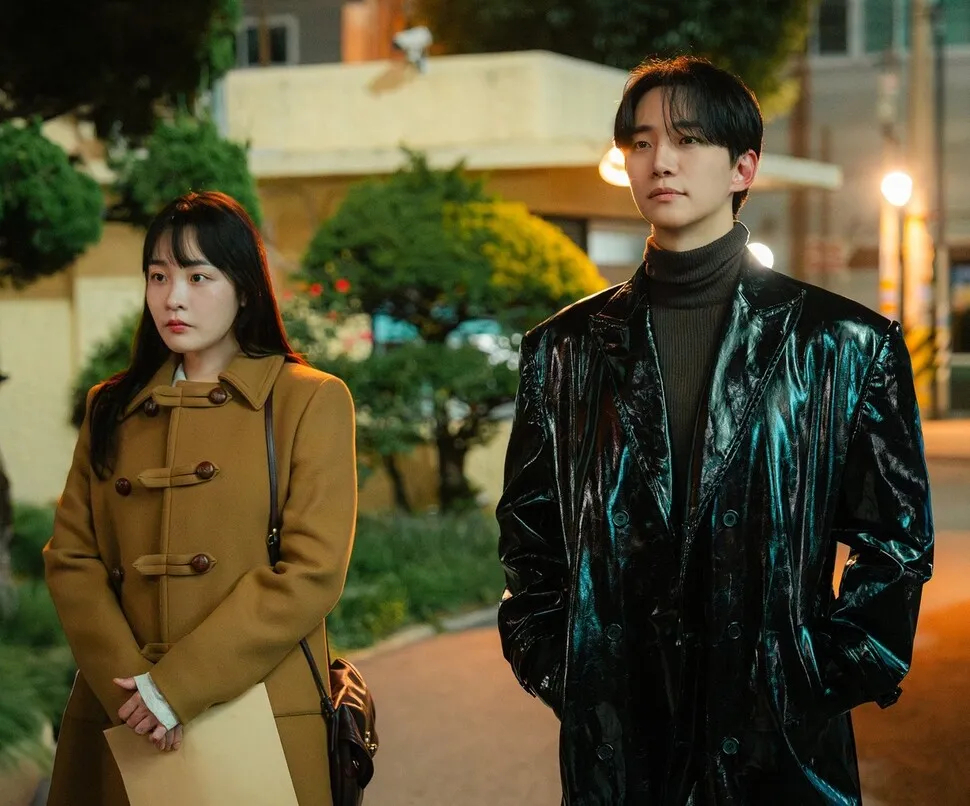
The romance with co-star Kim Min-ha, who plays the company's no-nonsense bookkeeper, gives the show its emotional center. It's front and center throughout, generating so many swoon-worthy moments that some complained it got in the way of the plot. Lee described their chemistry in almost musical terms: the silences between lines that somehow never felt awkward, the unplanned pauses that worked like rests in a score.
"There's this scene where Tae-poong walks her home and just says, 'Thanks for today,'" he recalled. "We didn't rehearse the pause that followed. It just happened, and it landed. That's when I knew we were in sync."
As it happens, Kim had been a fan of 2PM growing up. "I didn't know what to say," he said coolly. 'Thanks, I'll get you a signed album'? We just moved on."
Up next for Lee is "Cashero," a Netflix superhero comedy set to release Dec. 26, where he plays a cash-strapped superhero whose powers are only as strong as his bank balance. Then comes "Veteran 3," the latest installment in Korea's blockbuster cop franchise, one of the few homegrown films still pulling crowds to theaters.
The 35-year-old shows no signs of slowing down. But he's all the more grateful for it.
"Working on a project is stressful, obviously," he said. "But when the work comes out and I see what we made, that stress just melts away. Some people need breaks. I'm the kind of person who'd rather keep going."
He circled back to Tae-poong — the guy who throws himself in front of trucks, bets everything on long shots, faces the world with zero filter and a wide open heart.
"This show felt like a second life for me," Lee said. "It reminded me that when things fall apart, you don't have to carry it alone. The people around you — they're what hold you up. That's what I wanted to leave with the audience."
moonkihoon@heraldcorp.com