Ruling party attacks court for turning down warrant in martial law probe
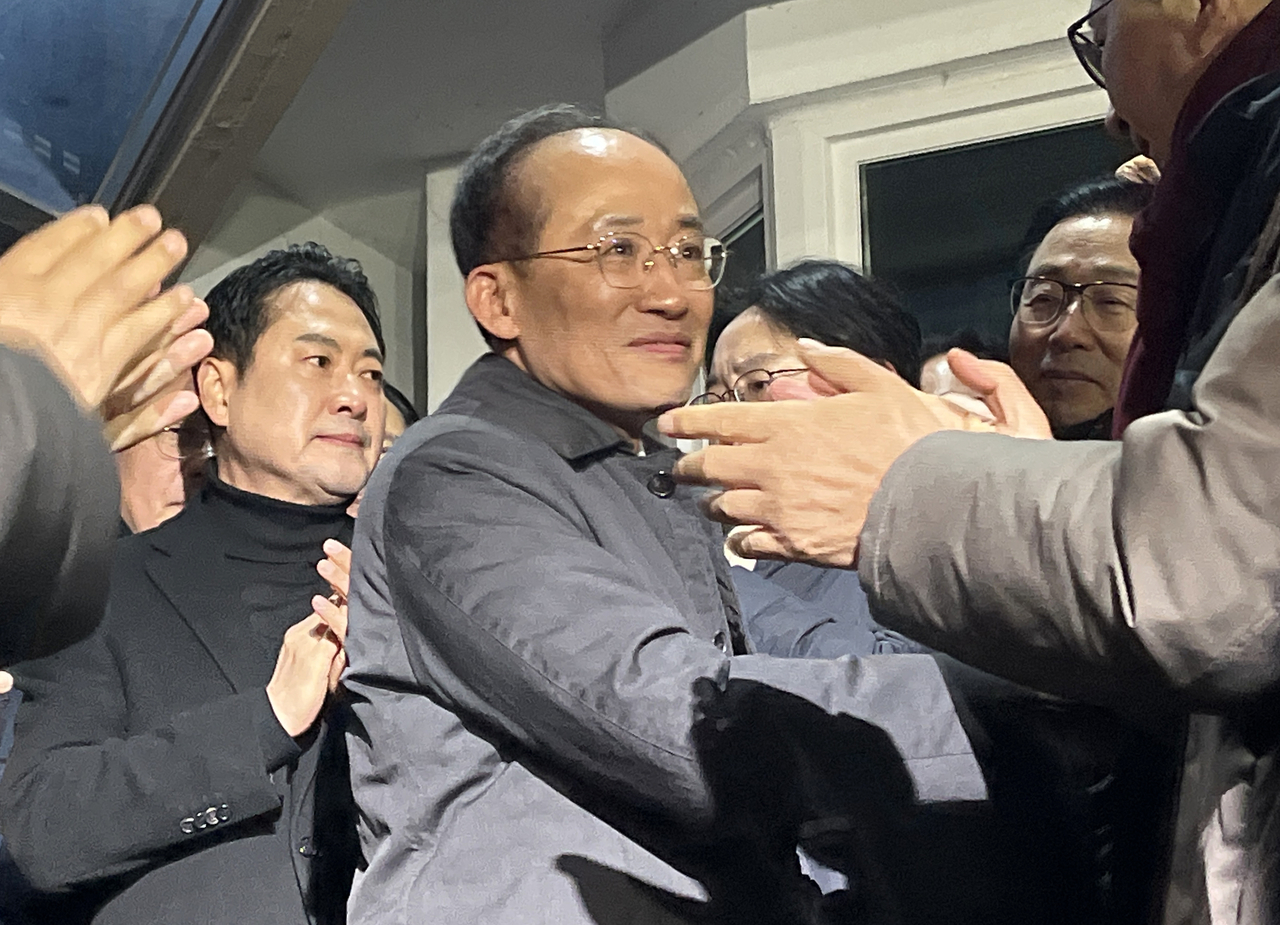
The ruling Democratic Party on Wednesday denounced a court decision refusing an arrest warrant for Choo Kyung-ho, the former floor leader of the main opposition People Power Party, as part of investigations into ex-President Yoon Suk Yeol’s imposition of martial law.
DP senior spokesperson Rep. Park Soo-hyun called the ruling “senseless,” claiming there is ample evidence that Choo actively impeded the parliamentary vote to lift the martial law declared by Yoon on Dec. 3 last year.
Prosecutors argue that Choo repeatedly changed the venue of a PPP meeting to stop members taking part in the National Assembly vote to reject the martial law.
Earlier Wednesday, the Seoul Central District Court rejected the special counsel’s request for Choo’s arrest, saying there were grounds to challenge this argument and that there is no sufficient risk of flight or destruction of evidence.
It ruled that Choo should be allowed to defend himself without physical detention. He was released immediately after the ruling, issued at 4:50 a.m.
Park accused the judiciary of obstructing the country’s effort to address the aftermath of Yoon’s actions and trampling on the public’s demand to restore constitutional order.
The PPP welcomed the court decision and said that it was an obvious choice, calling the special counsel's insurrection investigation a "third-rate probe based on imagination.
Rep. Park Seong-hoon, the senior spokesperson for the main opposition, said the court put the brakes on what he called "political ruse by DP and the Lee Jae Myung administration of accusing insurrection."
Choo's alleged role in martial law
The Assembly voted to overturn the martial law declaration hours after it was made.
The core allegation against Choo centers on whether, as floor leader of the then-ruling party during Yoon’s martial law declaration, he convened and rescheduled the party meeting with the intent of helping Yoon maintain martial law.
Only 18 of the PPP’s 108 lawmakers took part in the vote, although their votes were not needed in the end. The motion required a simple majority in the 300-seat legislature, and received the unanimous backing of the 190 lawmakers who took part.
Choo has denied wrongdoing, saying he had asked National Assembly Speaker Woo Won-shik for more time for PPP lawmakers to reach the parliamentary compound.
Choo claimed he knew nothing of the martial law beforehand, and he could not determine the legitimacy of the martial law based on the restricted information about the situation learned from phone conversations with Yoon, former Prime Minister Han Duck-soo, and other members of the Yoon administration.
Yoon was impeached on charges including insurrection and power abuse related to the martial law declaration, and is currently undergoing criminal trial.
The special counsel team led by Cho Eun-suk said it does not agree with the court's decision to reject Choo’s arrest but will respect it, and will indict the lawmaker without physical detention.
Would court rejection deal critical blow on insurrection probe?
The DP sought to minimize the implications of the ruling.
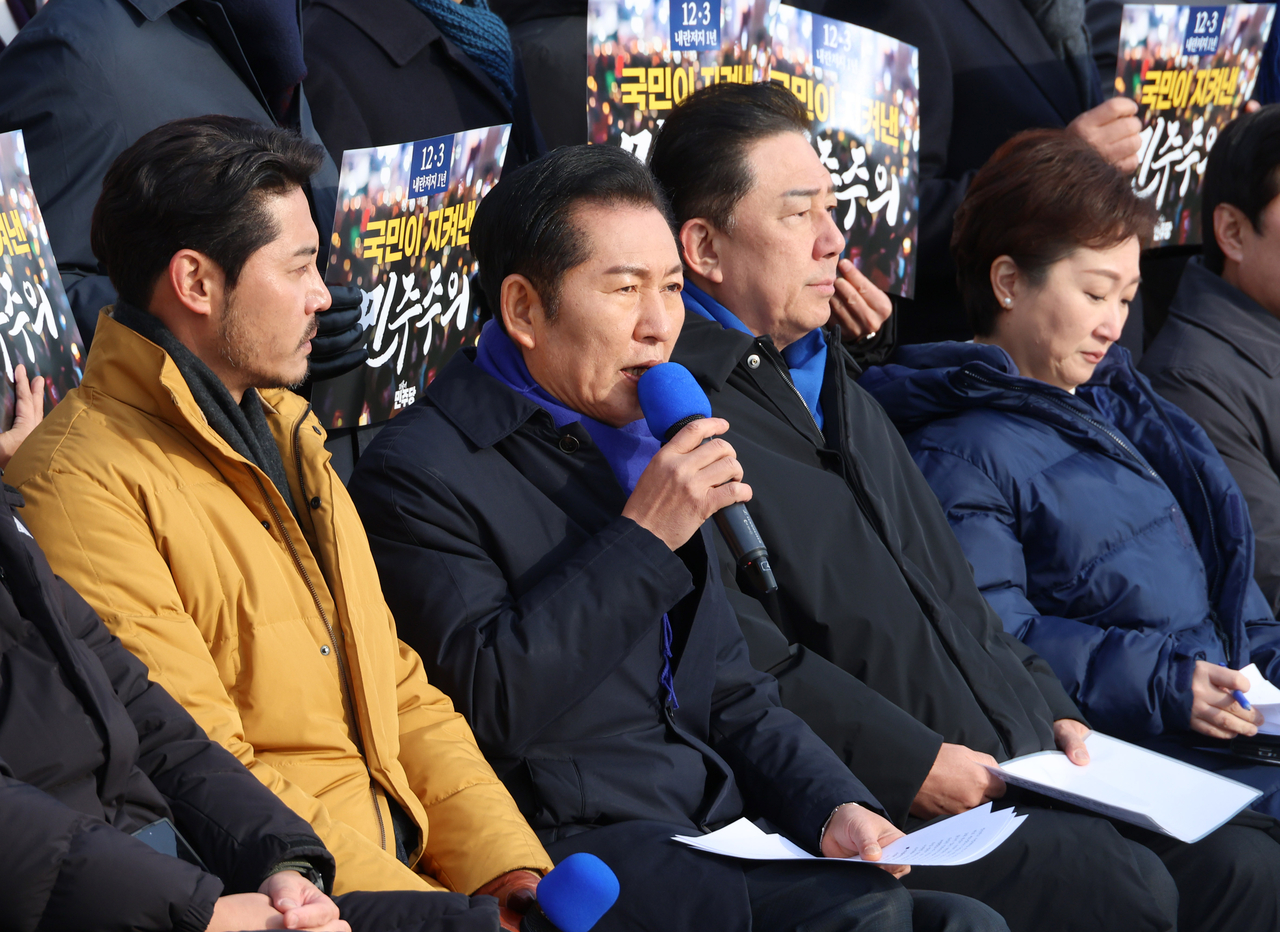
Immediately after the decision, the party’s Supreme Council gathered in front of the National Assembly, calling it “a judicial coup” and accusing the courts of acting in concert with the Yoon administration.
“The rejection of the arrest warrant does not mean the charges have been cleared,” DP leader Jeong Cheong-rae said.
“If he is convicted at trial, it will prove that the PPP is an unconstitutional party that should be disbanded tenfold, a hundredfold.”
PPP leader Jang Dong-hyeok, however, called the decision "the victory of the people against dictatorship," and said it marked the end of the "dark past" stained with impeachment and accusations of insurrection.
Choo’s indictment is expected to be among the final actions of the special counsel, which launched its investigation on June 18 into insurrection and treason charges against Yoon and senior officials. Yoon, former Defense Minister Kim Yong-hyun — now under arrest — and former prime minister Han Duck-soo have all been indicted.
The special counsel has so far sought arrest warrants for Choo and five other senior officials from the Yoon administration, but the court has approved warrants for only three — Yoon, former Interior Minister Lee Sang-min and former National Intelligence Service chief Cho Tae-yong. The repeated rejections have dealt a blow to the momentum of the probe.
minsikyoon@heraldcorp.com