-

Dozens of university applicants rejected for school violence records ― and this gets warm welcome
For generations of South Korean students, college admission has been more than an academic milestone. It has been the gateway to social mobility, job stability and lifelong status. Now, in an unprecedented shift in education policy, flagship national universities across the country, including the nation’s most prestigious Seoul National University, have begun rejecting applicants with records of school violence. According to data obtained by minor Rebuilding Korea Party lawmaker Rep. Kang Kyung-
Nov. 3, 2025 -
South Korea’s youngest children now at center of rising antidepressant use, data shows
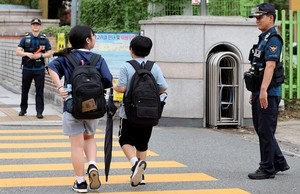
The number of children prescribed antidepressants in South Korea more than doubled in just three years. New data from South Korea’s national health insurance system shows that 38,303 children aged 7 to 12 were prescribed antidepressants in 2024. That figure has surged 104 percent since 2021, when just 18,769 received such treatment. Prescriptions for teenagers aged 13 to 17 also climbed sharply, up 73 percent over the same period to nearly 99,000. While teens still account for the majority of ch
Oct. 1, 2025 -

Arizona State University chief maps 22nd century college model through AI
Artificial intelligence is “everywhere and impossible to ignore,” and universities must harness it to empower rather than replace human learning, Arizona State University President Michael Crow said in an interview during his visit to Seoul this week. “With its unique ability to instantaneously transfer detailed information across time and generations, AI demonstrates the powerful potential to transform how we teach, learn and work,” Crow said, adding that ASU is committed to “advancing the thou
Sept. 29, 2025 -
More than half of foreign students in Korea lack study-level language skills under weak policy oversight
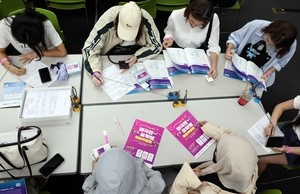
More than half of international students pursuing degrees at South Korean universities lack the Korean or English proficiency needed to follow their coursework, raising concerns over the country’s push to attract overseas students without adequate support systems. Data released by the Ministry of Education on Friday revealed that only about one-third, or 34 percent, of degree-seeking international students in 2024 had reached Level 4 or higher on the official Korean language proficiency exam kno
Sept. 21, 2025 -
Korea eyes AI future, but classrooms struggle to prepare generation meant to lead
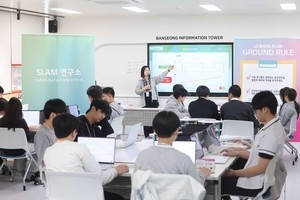
South Korea wants to be a world leader in artificial intelligence, but its schools are grappling to prepare the next generation amid confusion concerning what should be taught and, naturally, a lack of qualified faculty to do just that. In 2022, the Education Ministry announced that coding would become a mandatory subject in middle schools from 2025 and in elementary schools from 2026. The plan was part of a national drive to expand AI talent and prepare the next generation for a digital future.
Sept. 17, 2025 -

Lee's policy blueprint takes aim at educational imbalances
South Korea has long wrestled with deep regional disparities in education and sky-high private tuition costs, with a widening gap between students whose families can afford it and those whose cannot. Against this backdrop, the Lee Jae Myung administration on Wednesday announced six key education proposals designed to break the capital-centric hierarchy among schools, strengthen public schooling and prepare talent for the artificial intelligence era. The measures were introduced as part of a broa
Sept. 17, 2025 -
Despite fewer students, more classrooms 'overcrowded' as schools slow to adapt
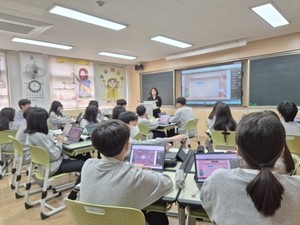
South Korea is seeing more of what the government defines as "overcrowded" classrooms, especially in middle and high schools, despite a shrinking school-age population. Data from the Ministry of Education on Thursday showed that 16.8 percent of all classes in elementary, middle and high schools in 2025 had 28 or more students, classifying them as overcrowded. The rate was up from 16.5 percent last year, with 39,123 of 231,708 total classes exceeding the threshold. Elementary schools reported imp
Sept. 13, 2025 -
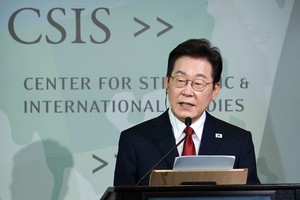
Lee vows to increase defense spending, modernize alliance with US
South Korean President Lee Jae Myung on Tuesday pledged to boost defense spending, vowing a more proactive role for Seoul in its alliance with the United States in President Donald Trump's second term. In a speech at the Statesmen’s Forum hosted by the Center for Strategic and International Studies in Washington, Lee said his administration would build a "smart, elite military" to address 21st-century security challenges, stressing that Korea’s defense commitment to the alliance would remain iro
Aug. 26, 2025 -
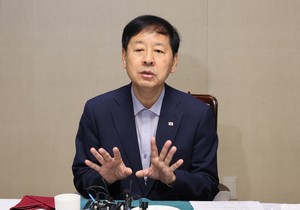
Finance chief urges science institutions to lead AI-driven 'super innovation' economy
Finance Minister Koo Yun-cheol called on the nation's four major science and technology institutions Tuesday to take the lead in transforming South Korea's economy through "super innovation" centered around artificial intelligence. Koo made the call during a meeting with the heads of the Korea Advanced Institute of Science and Technology, Gwangju Institute of Science and Technology, Daegu Gyeongbuk Institute of Science and Technology, and Ulsan National Institute of Science and Technology. "To g
Aug. 12, 2025 -
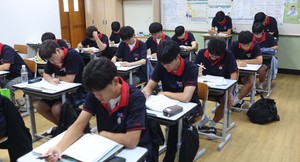
Gangnam students are quitting school, but not their studies
Gangnam, Seocho and Songpa, known collectively as Seoul’s “Gangnam 3 districts” and home to South Korea’s most competitive school zones, recorded the highest dropout rates among general high schools in the capital last year. According to the Korea Educational Development Institute’s regional dropout statistics released Sunday, both Gangnam-gu and Seocho-gu posted dropout rates of 2.7 percent in 2024, meaning that two to three out of every 100 students left school before graduation. Songpa-gu fol
Aug. 10, 2025 -
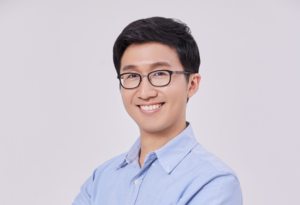
Seoul Cyber University to host lecture on future of autonomous driving
Seoul Cyber University will hold a special lecture titled "The Present and Future of Autonomous Driving” on Saturday at 2 p.m. for current, incoming and prospective students. Professor Kwak Jun-young of the department of computer engineering will lead the lecture, covering the current technological status and market conditions of autonomous vehicles, as well as key challenges and their implications for the future. Registration is available in advance through the university’s admissions website.
Aug. 6, 2025 -
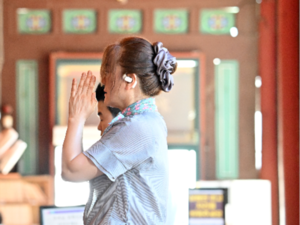
100 days to Suneung
The nationally administered College Scholastic Ability Test, known locally as Suneung, is now 100 days away. This year’s exam is to take place on Nov. 13 at testing centers across the country. According to education officials, an increasing number of science-track students are choosing social studies subjects — a trend known as the “social studies run.” As major universities now accept social studies scores to fulfill minimum Suneung requirements for admission next year, students' social studies
Aug. 5, 2025 -
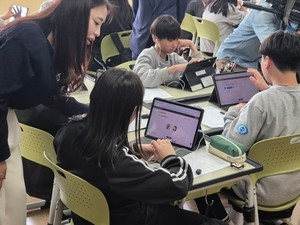
Korean students' motivation to study English drops as AI tools rise: report
An increasing number of middle school students in South Korea are asking whether they need to study English at all, now that artificial intelligence can do the work for them. A new government report shows a clear drop in student motivation to learn English, and education officials posit that the widespread use of AI-powered translation apps is playing a key role. According to the 2024 National Assessment of Educational Achievement, released Tuesday by South Korea’s Ministry of Education and the
July 23, 2025 -
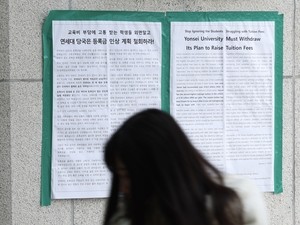
South Korea’s student loan debt tops W2tr as youth unemployment deepens
Young South Koreans are borrowing more money than ever for college, while their chances of landing a stable job grow slimmer. New data from the Korea Student Aid Foundation reveals that student loan borrowing surged to 2.11 trillion won ($1.44 billion) in 2024, the highest figure in nine years. This marks an 11 percent jump from the previous year’s total of 1.89 trillion won. The last time borrowing exceeded 2 trillion won was in 2015. The spike comes as job opportunities for young people are dr
July 18, 2025 -
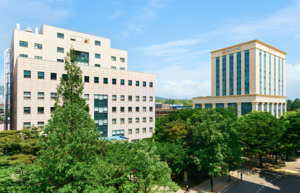
Sejong University tops Korea's tech transfer earnings in 2024
Sejong University announced that its technology transfer income for 2024 was the highest among South Korean universities, posting 17.37 billion won ($12.5 million) that year. It outpaced other top Korean universities, including Kyung Hee University at 9.7 billion won, KAIST at 8.1 billion won, Seoul National University at 6.4 billion won and Sungkyunkwan University at 4.3 billion won. This figure is the second-highest in Korean history, following Hanyang University’s 27.9 billion won in 2022, an
July 15, 2025