In K-dramas, food often operates as its own kind of language — a conversational channel that runs parallel to dialogue and, at times, speaks louder than it.
From late-night ramyeon to after-work chimaek (chicken and beer), food in K-dramas does more than fill screen time; it functions as a kind of on-screen tell, revealing what characters can’t articulate.
K-dramas thread the country's everyday food culture into the fabric of their storytelling, using familiar touches — a shared pot of noodles, convenience-store snack runs — as cues that mark shifting boundaries, hint at buried tension and quietly move relationships forward.
Ramyeon: Part comfort food, part love language
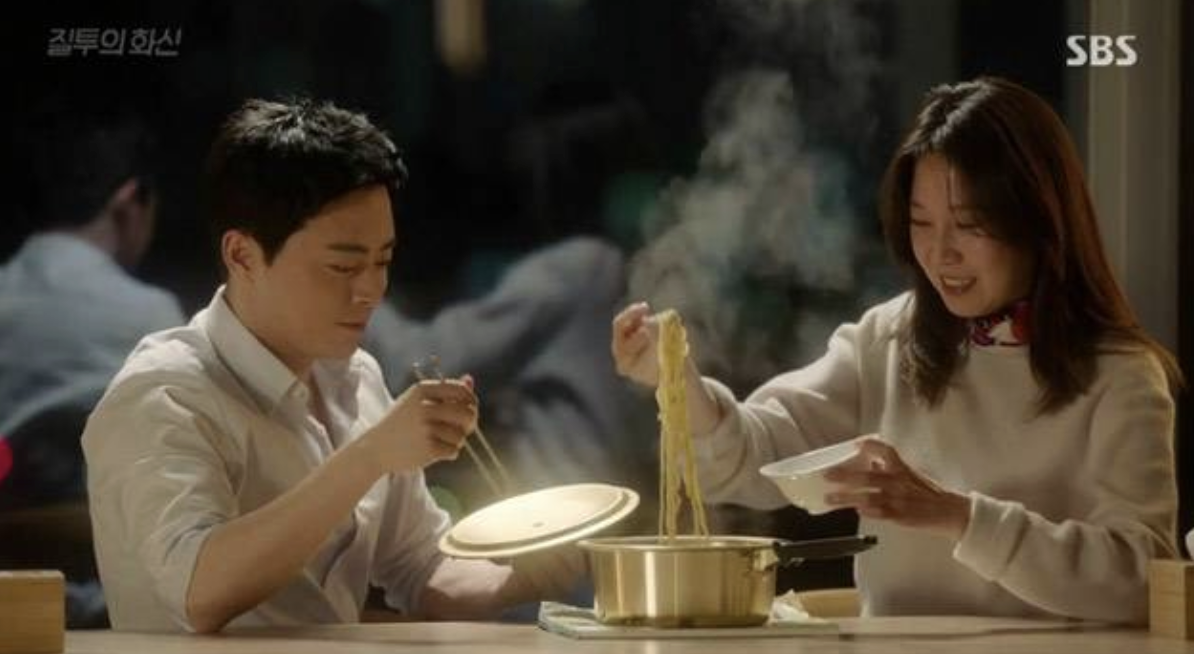
In K-dramas, ramyeon usually carries two distinct meanings. The first is its role as a cheap late-night comfort. It’s the go-to food after overtime, a quick meal people turn to when they’re stressed, exhausted or in need of warmth. Because of that, ramyeon often appears in scenes where characters reveal emotional vulnerability.
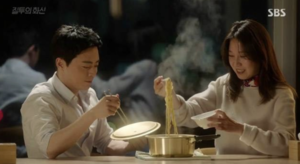
Meanwhile, ramyeon can also be a shorthand for romantic tension in K-dramas, sometimes sweet, sometimes bold. Sharing a pot signals a boost toward intimacy, as seen in "Don’t Dare to Dream," where the leads’ relationship matures over a simple bowl. And then there’s the now-famous line, “Do you want to come over for ramyeon?” The phrase has evolved into a well-known flirtation cue, often carrying a sexual undertone. Countless Korean rom-coms have cemented this meme, making ramyeon a versatile storytelling device.
Chimaek: Release valve
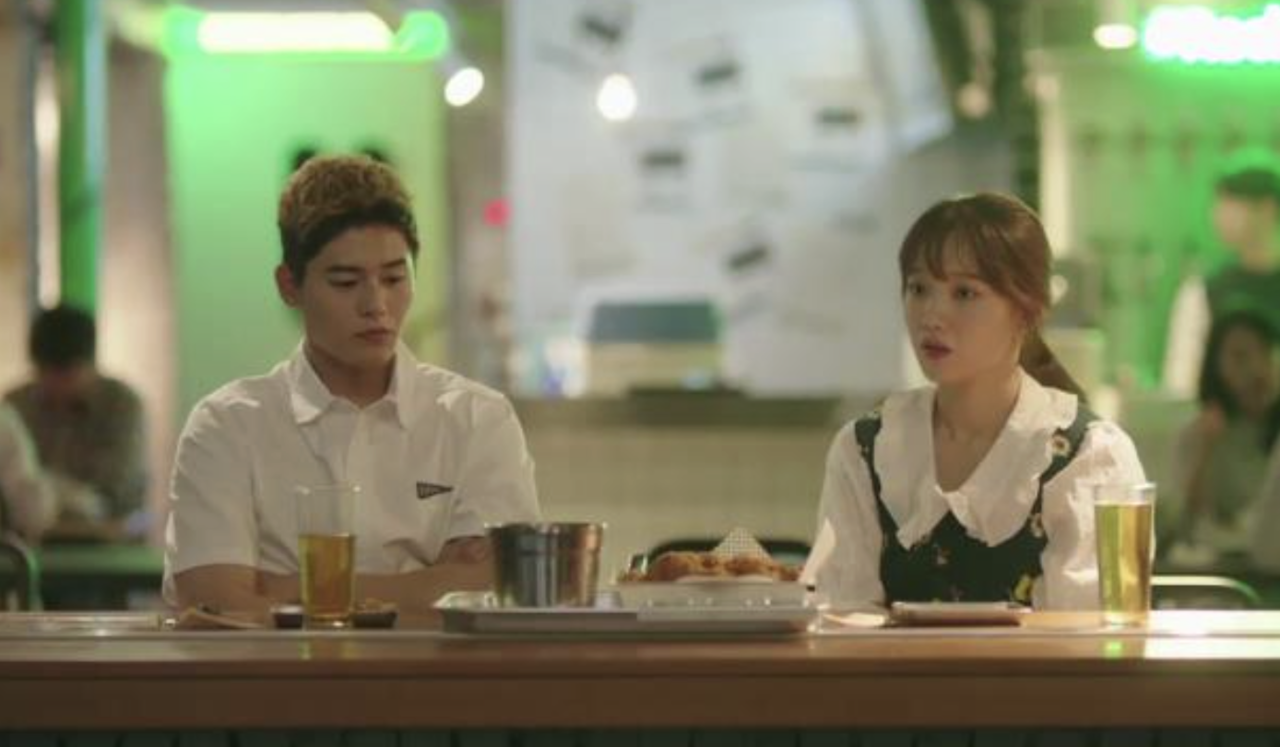
In Korean storytelling, few food pairings carry as much emotional shorthand as chimaek, the duo of fried chicken and beer. More than a meal, it is an outlet for overworked office employees and young adults navigating the turbulence of everyday life. Sharing chimaek after a demanding day at work signals equality, as well as a momentary escape from hierarchy.
K-dramas have repeatedly used chimaek to mark turning points in relationships and character arcs. In "About Time," Mi-ka and Jae-yu share quiet chimaek moments that strip away their emotional armor. "Misaeng" uses a post-overtime chimaek scene to show weary office workers bonding after yet another brutal day, while "Hospital Playlist" turns casual chimaek nights among doctors into moments of camaraderie.
Across these series, chimaek isn’t just a snack; it’s an on-screen signal for bonding, catharsis and the simple moments that define modern Korean life.
Coffee: Social currency
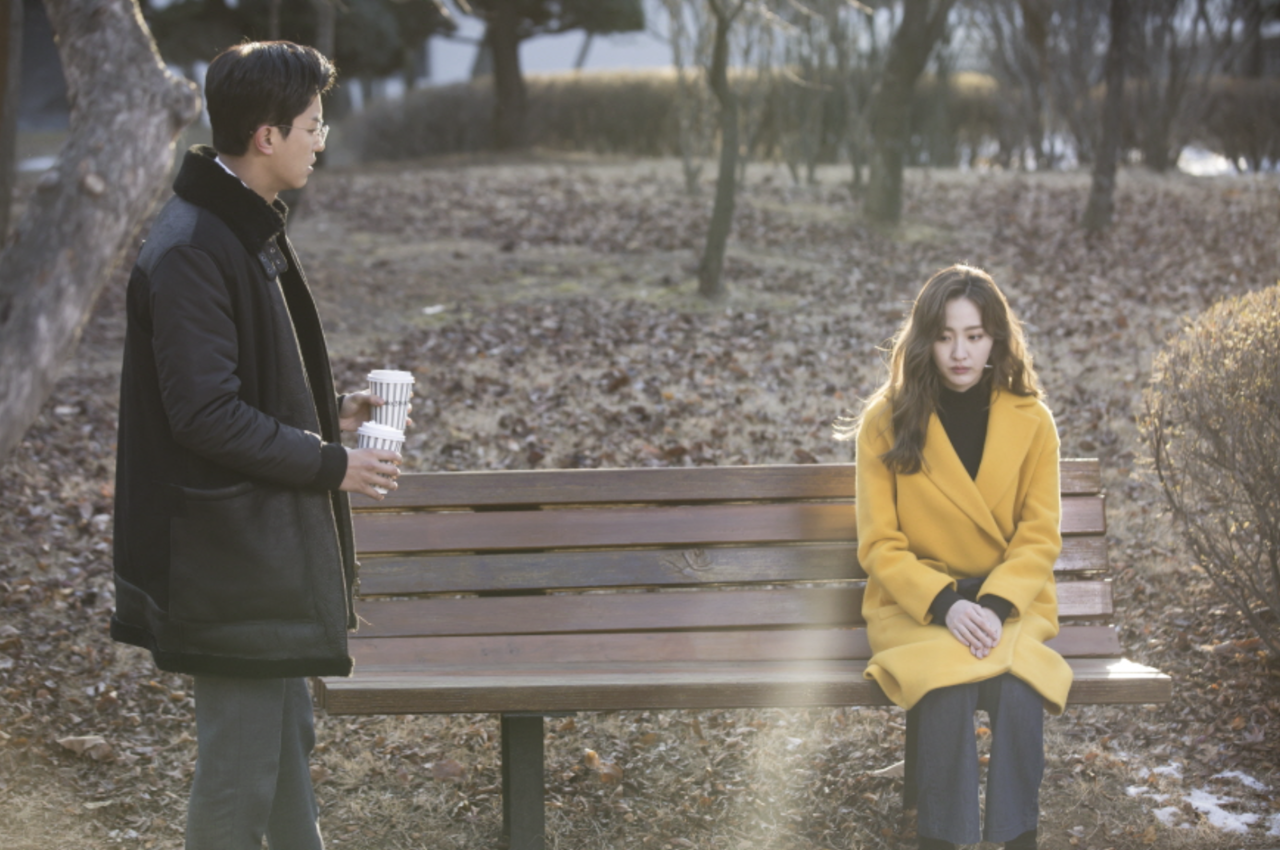
In K-dramas, coffee is more than a caffeine fix: it’s an essential social currency. In Korea, it's common to pick up coffee before a meeting with the team as a small gesture of consideration. In this context, coffee becomes a nonverbal signal, a tacit way of softening tension or extending goodwill without needing to articulate it outright.
These nuances appear frequently in K-dramas, where a simple cup of coffee can shift the emotional temperature of a scene. In "Judge vs. Judge," Eui-hyun handing coffee to Se-ra becomes a catalyst for closeness, while "Because This Is My First Life" uses the ritual of preparing morning coffee to trace the slow, steady evolution of a relationship.
A single cup can soothe, seduce, apologize or connect, making it a powerful prop in K-drama storytelling.
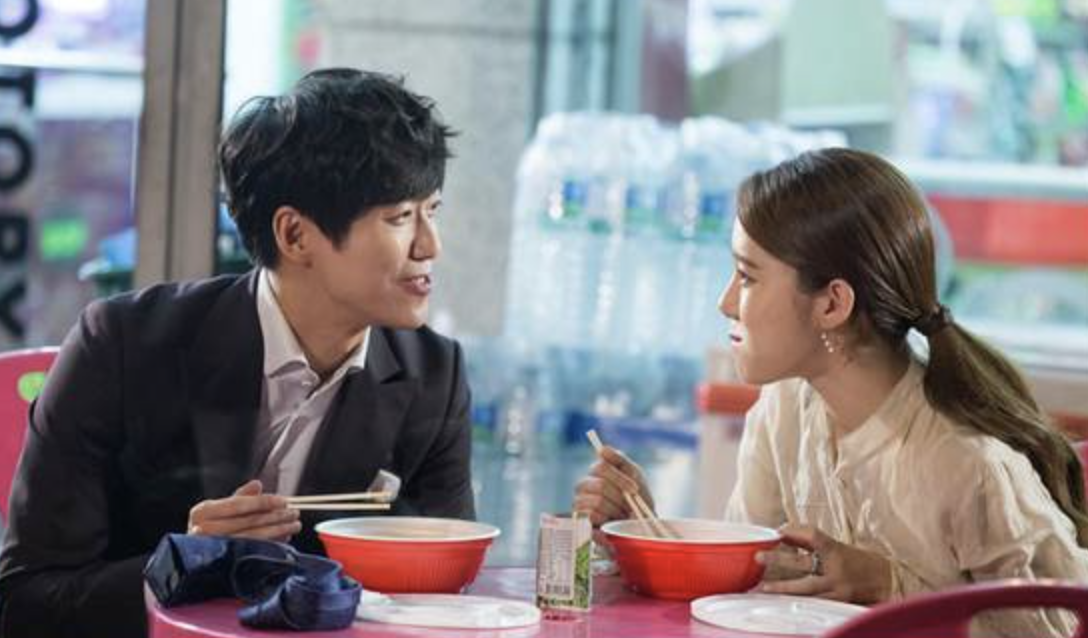
Together, these foods create a muted code for what’s unsaid across diverse genres of K-dramas.
They’re not throwaway meals or decorative backdrops, but important plot devices that reveal how characters communicate feelings, manage relationships and move through the narrative.
"K-drama Survival Guide" series is your passport to decoding the language quirks and social cues of K-dramas. Each installment unpacks the nuances often lost in translation, offering a deeper look into the subcontexts of K-drama. — Ed.