A few sneezes don’t call for a blessing, at least not among today’s Koreans
Nisa Sermchaiwong, a 26-year-old American who moved to Seoul for graduate school in 2022, recalls the awkward moment she first said “bless you” to a classmate who sneezed.
“I was in our school lab, and I guess my friend was sick because she sneezed five times in 10 minutes,” she said. “I said ‘bless you’ each time because that’s the norm in the States.”
But in a silent room, the gesture quickly became uncomfortable.
“Our lab was very quiet because everyone was working. And each time I said ‘bless you,’ my voice got smaller and smaller,” she added, laughing. “The fifth ‘bless you’ was basically a mumble.”
Her senior colleague burst into laughter, and she realized that saying “bless you” after a sneeze is not common in Korea. “I was so embarrassed,” Sermchaiwong said.
Sermchaiwong’s experience is a familiar one among foreigners in Korea. Posts on Reddit frequently ask why Koreans typically do not acknowledge a sneeze at all.
One user, reflecting on their time studying in Korea, recalled asking a teacher the same question: “(My teacher) said there wasn’t a phrase for ‘bless you’ because people don’t normally pay attention to sneezing the way we do in the West.”
Across the world, most languages have a phrase for responding to a sneeze, often rooted in superstition or religion.
European languages commonly use variations of “bless you.” Scholars disagree on the exact origin, but dominant theories all interpret the expression as protection from danger: that sneezing could expel the soul and leave it vulnerable to evil spirits, that sneezing signaled infection during the Black Death, or that saying "bless you" stemmed from a sixth-century decree by Pope Gregory I urging a quick prayer against illness.
In many Muslim-majority cultures, people often say “Al-hamdulillah,” meaning “Praise be to God,” as a wish for continued blessing. Meanwhile, languages such as German, Italian and Hebrew use variations of a word meaning “health.”
Korean, however, largely lacks an equivalent expression in daily use — at least today.
"Language is a cultural heritage of the people who use it," said Seong Gi-ji, former senior researcher at the Korean Language Society, a civic group working to preserve the Korean language. "In our (Korean) culture, we don't consider sneezing as a big health problem that requires us to wish for the other's well-being."
Many online commenters speculate that the absence of a unifying historical experience involving disease and religion explains why Korean lacks a postsneeze greeting.
However, experts say more research is needed to fully understand why such expressions have not developed in Korean.
Few Koreans today know this, but there used to be a Korean equivalent to “bless you” said after a sneeze to prevent illness: “gaechine-sswe.”
The Standard Korean Language Dictionary, published by the National Institute of Korean Language, defines “gaechine-sswe” as an exclamation used after someone sneezes to ward off the flu, with “aeisswe” listed as a shortened form.
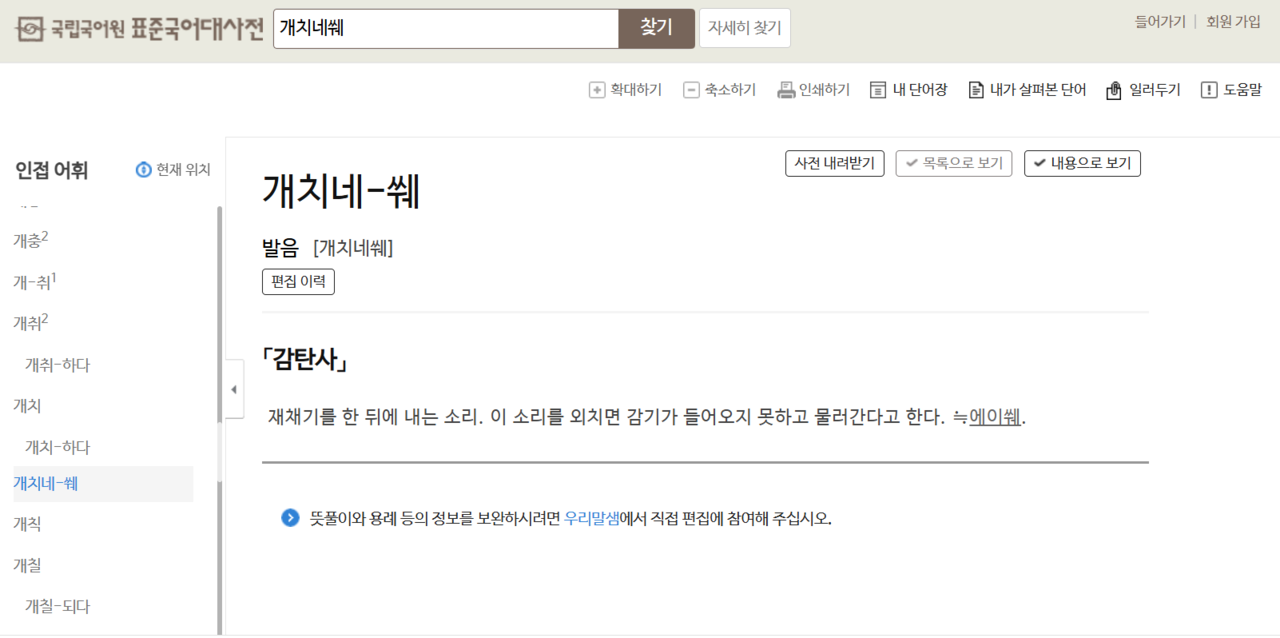
“Gaechine-sswe” is most likely a compound word made from “gaechine” — an onomatopoeia for sneezing — and “sswe” — a pure Korean word meaning “alleviate,” according to the Korean Language Society.
Linguists have also identified regional variants: “gaechine-ssi” in the dialect of Gangwon Province and “heotssi” on Jeju Island.
"Onomatopoeias can naturally be invented or fall out of use as time goes by," said Seong.
"It is natural that we no longer hear the word 'gaechine-sswe' -- an expression that mimics a physiological phenomenon which gives people discomfort -- among modern Koreans who have received systematic education on public etiquette and manners," he added.
'Not our culture anymore'
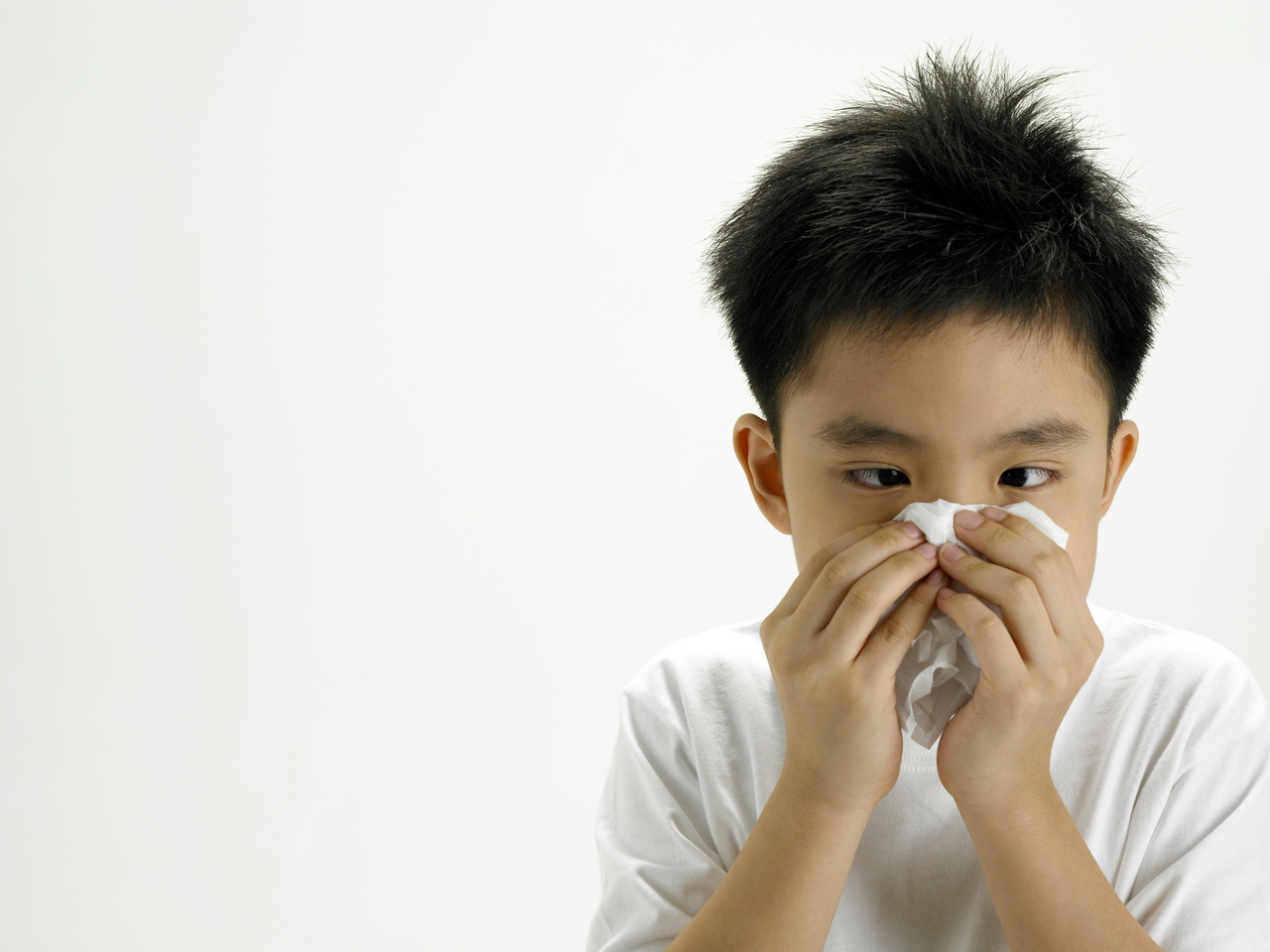
Despite this linguistic evidence, most Koreans today simply carry on after a sneeze — no blessing required. In fact, many seem to feel there is no need to revive the etiquette at all.
"Why would there be (a word for 'bless you' in Korean)? I think it's weirder that there's an obligation to say something after every sneeze. What about yawns and farts?" humorously read a comment on Reddit by a Korean user.
Some Koreans go so far as to say that being called out for sneezing can feel intrusive.
"I haven't given it much thought, but I think it could be a bit burdensome," said 26-year-old Kim Hyun-woo. "Sneezing is really nothing of note, but if someone keeps acknowledging me for it, I think I would definitely feel uncomfortable."
To Kim, staying silent after a sneeze is the norm. "Saying 'bless you' isn't disrespectful, per se. I just don't think such a culture exists here."
seungku99@heraldcorp.com