Life’s second coming-of-age: Rediscovering self after retirement
In Korean society, we could say that identity is rarely a solitary thing. From an early age, we are placed into systems: given a class number at school and later assigned to a department in a company, a title affixed to our name. That title matters because it becomes social proof of who we are.
So we grow up learning to exist as “someone who belongs somewhere.” That frame defines us. And as long as it holds, our place in society feels stable.
The novel recently adapted to the hit eponymous drama series, "The Dream Life of Mr. Kim" begins precisely at the moment when that frame starts to crack, according to author Song Hee-koo.
He said writing the story began with a simple realization: We all retire someday.
“Whether by choice or by force, retirement is an unavoidable current of life,” the 42-year-old writer said on his YouTube channel. After penning the three-volume bestseller in 2021, he retired from a major conglomerate to become a full-time author and continues to run a YouTube channel focused on real estate. The book sold more than 400,000 copies.
“As long as we are inside the frame, our identity feels clear. We have a business card. We belong to an organization that calls us to our role every day," he said. "But the moment that belonging disappears, we are bound to shake. That is when we finally begin to ask: Who was I? What did I live by? Who was I living as? This novel began from those questions."
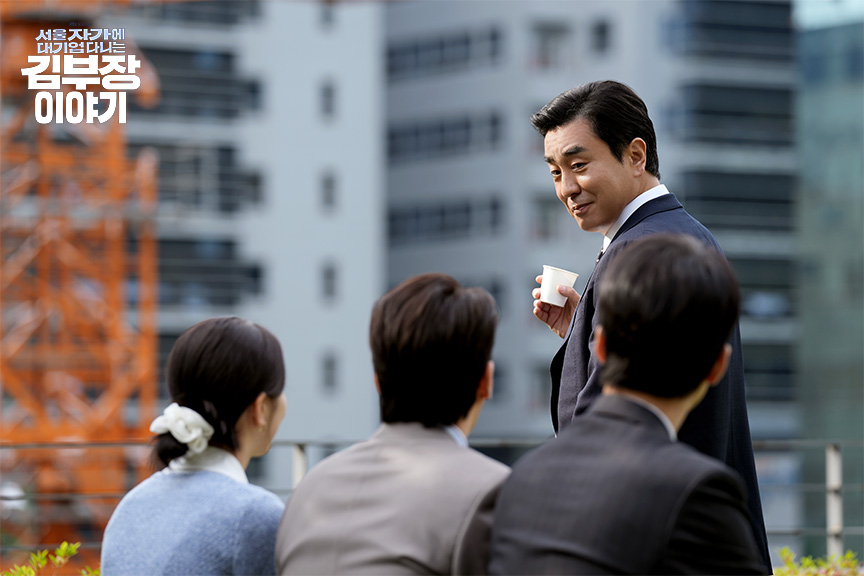
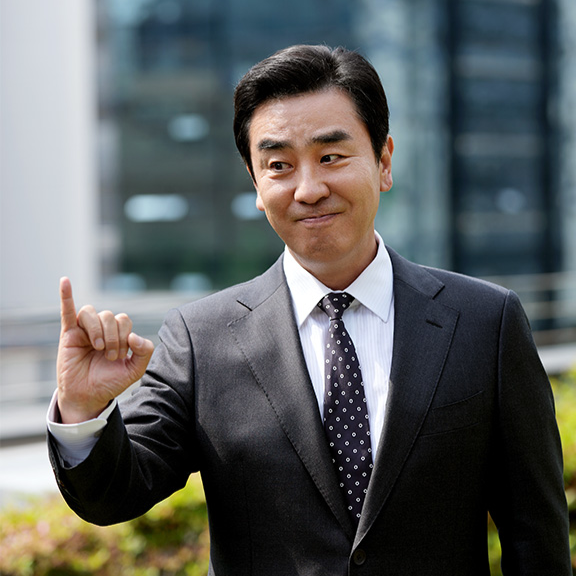
The office comedy-drama following Mr. Kim (played by Ryu Seung-ryong) has won widespread empathy for its hyper-realistic portrayal of a middle-aged manager navigating corporate life in Korea.
The Korean title translates roughly as "The Tale of Department Head Kim at a Conglomerate Who Owns a House in Seoul." Kim appears, at first glance, to have achieved the full trifecta of Korean success.
But this outward stability masks an inner instability. The question "Who am I when the title disappears?" works as the emotional engine of both the novel and its screen adaptation.
"This is not simply a narrative of a man’s downfall. It is a story of reconstruction. Kim, stripped of status, is forced to meet himself at last," said Song. "Along the way, he begins to see the people who had quietly stood beside him for years: his family, his colleagues, his friends."
In that sense, the series is also a coming-of-age story — belated, but no less vital. Retirement here is not treated as an ending, but as a beginning: a return to the self before the nameplate on the desk.
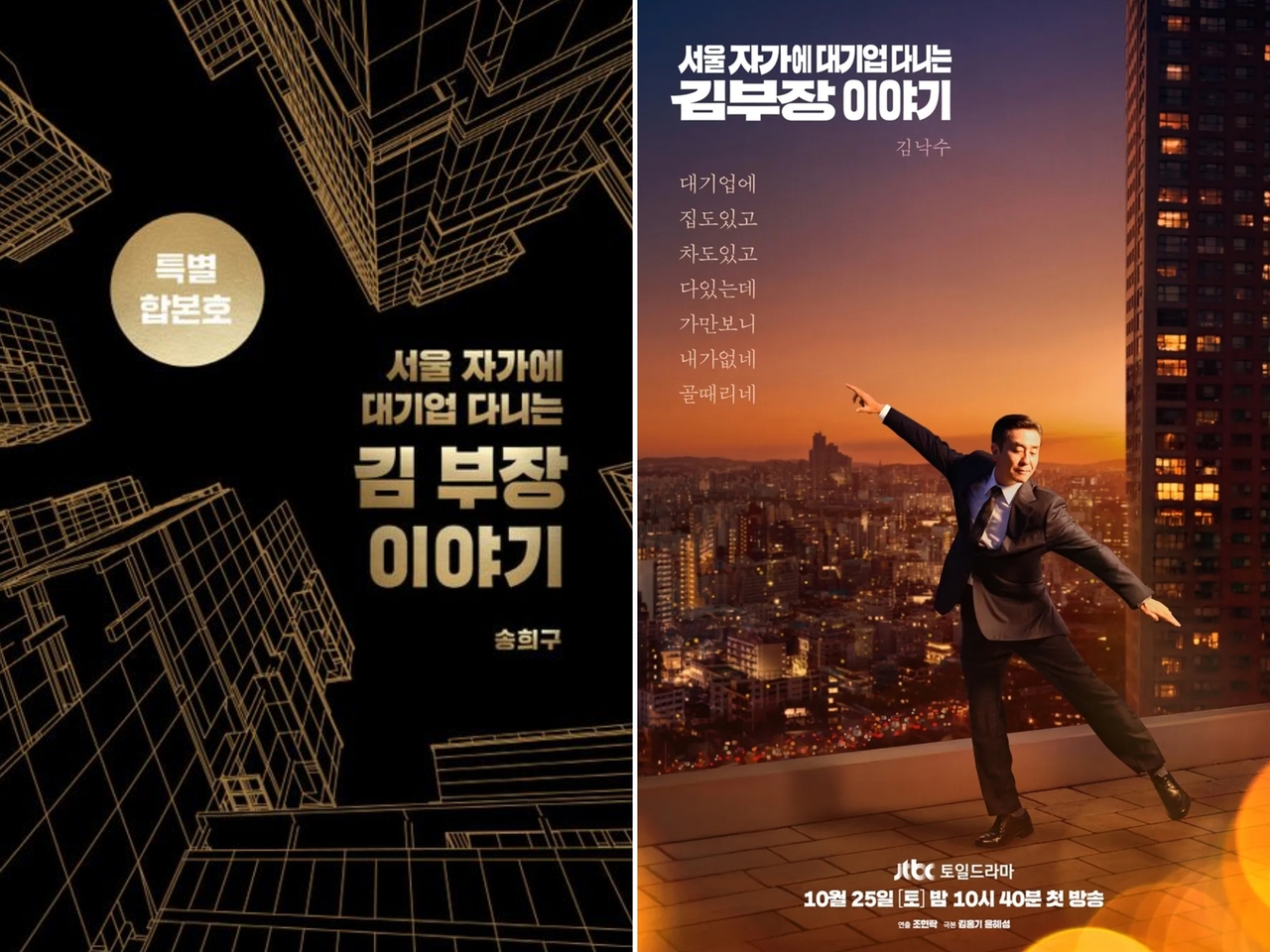
Where novel, drama diverge
The drama series adapts only the first volume of the original three-volume series. The remaining books unfold within the same corporate universe, but shift perspective to different characters: a junior employee obsessed with conspicuous consumption, another who dreams of financial independence and finally a middle manager whom the author has identified as closest to his own persona.
The drama series and the novel differ most in direction and characterization. Compressing the story into 12 episodes, the show intensifies the cruelty of the workplace and renders the characters more “typical.”
On the page, Kim is a formidable sales ace, but his flaw lies not in skill, but in communication and leadership. When a junior employee submits a report, he rewrites it entirely, not to steal credit, but because his corrections genuinely improve the work.
Yet his disregard for his subordinates ultimately catches up with him, and he is let go for lacking team spirit. His demotion is not framed as betrayal; his competitor’s promotion feels justified, highlighting the kind of leadership that truly sustains an organization: listening, mediating and valuing the team.
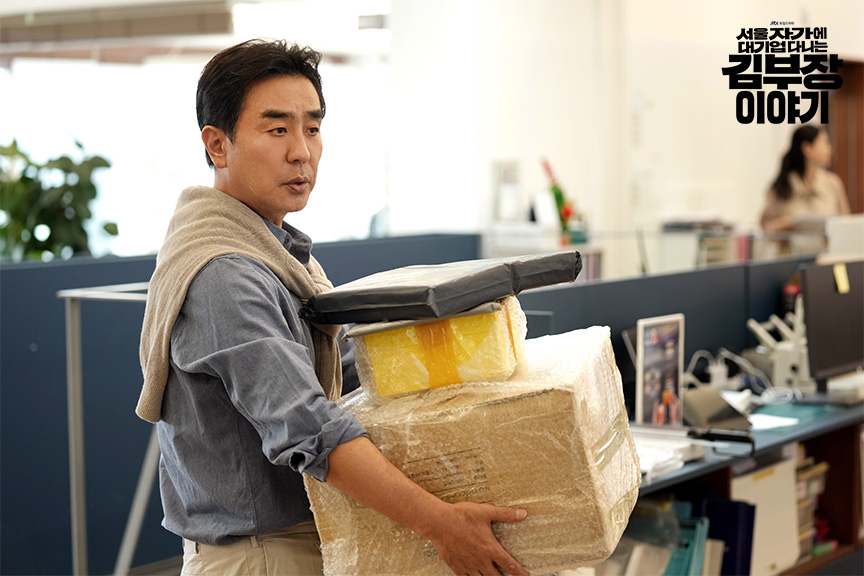
The series leans into the existential terror of being replaced. It sharpens the cruelty of corporate life and reframes Kim as a casualty of generational shift. He is betrayed by a longtime colleague, outpaced by younger talent and buffeted by institutional indifference. The narrative more visceral and more immediately accessible to a wide audience.
The family around him shifts as well. In the novel, his son is independent and entrepreneurial, rather than shaky and infatuated with a first love; his wife, quietly formidable on the page, turns out to understand how to navigate the world more practically than Kim.
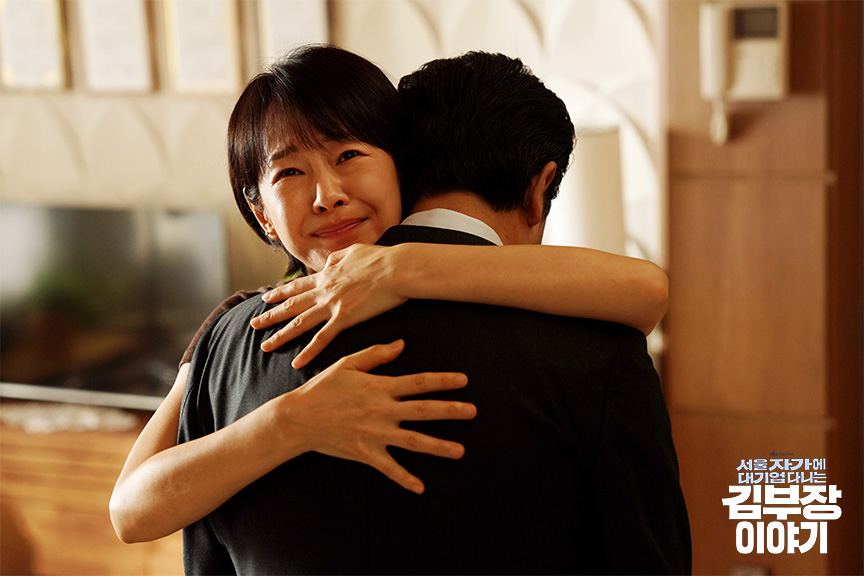
The author offers a quiet answer through the novel: We need not solve someone else’s equation of success, own what they own or climb the ladders they have built. A meaningful life is taken one honest step at a time with the people we love.
Still, at the heart of both versions lies Kim’s transformation. That transformation is anchored by the performance of Ryu Seung-ryong, whom both the original author and director have praised as the TV drama’s greatest strength.
The 12-part series aired on JTBC and is now available on Netflix.
hwangdh@heraldcorp.com