K-pop, local food, accessible city peaks draw new wave of international hikers
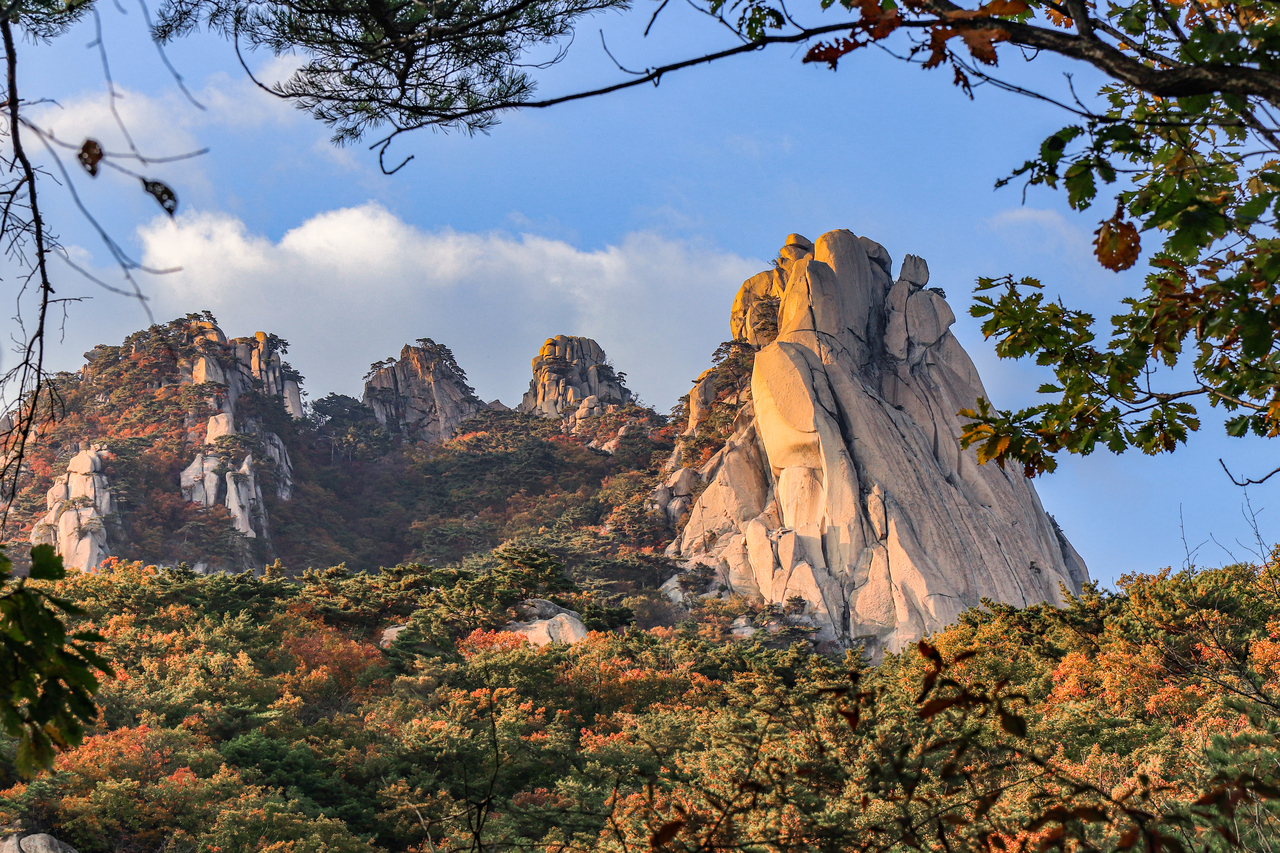
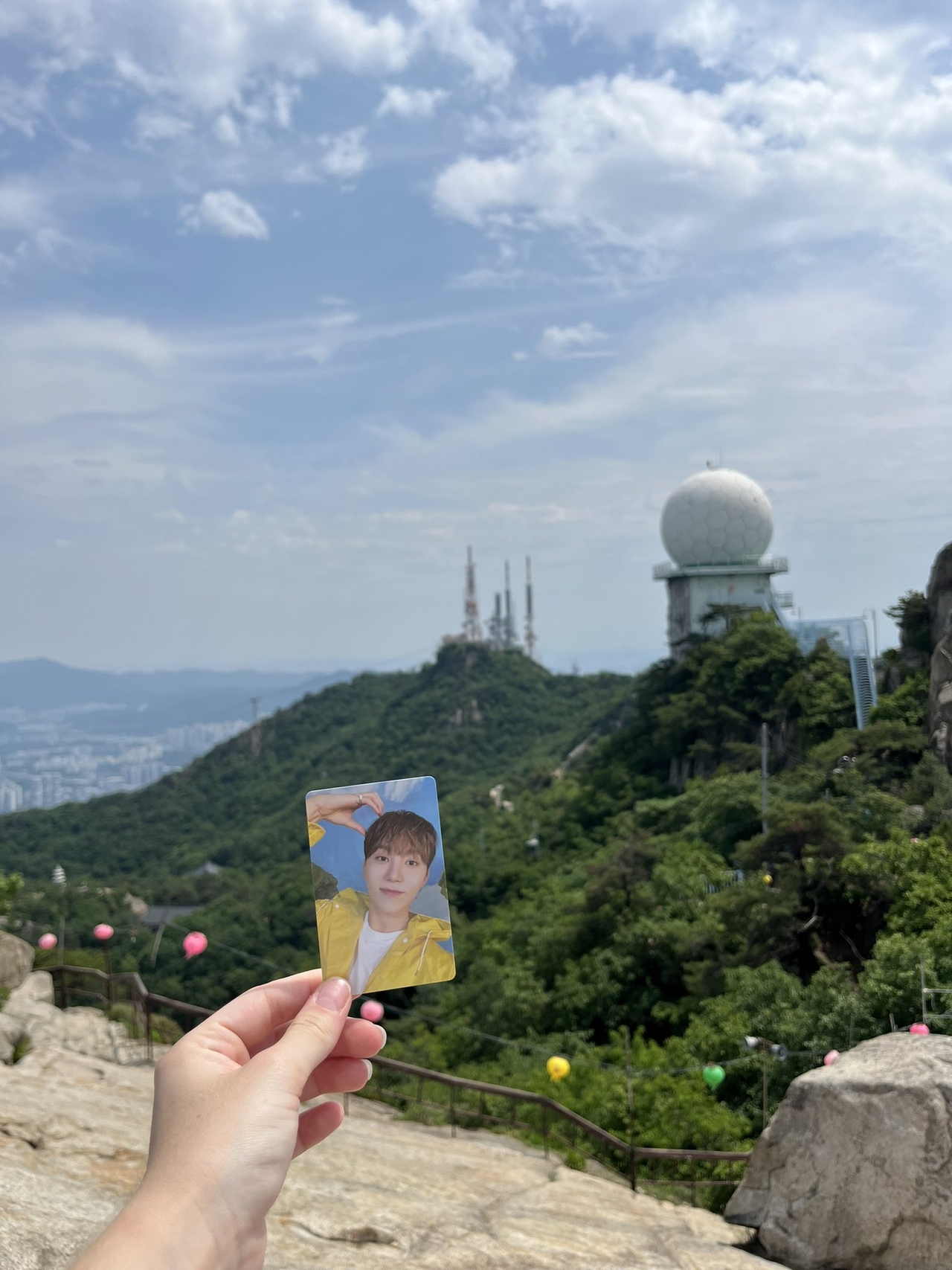
Lari, a 20-year-old from France, hiked Gwanaksan in southern Seoul during her first visit to Korea in June. A YouTube video of K-pop singer Boo Seung-kwan at the summit inspired her, as she is a fan of his group, Seventeen.
“I really liked the views throughout the trail, even though I was a bit scared at the very top. The few people I met were nice, and someone even helped me find the right way at one point,” Lari said.
Long regarded as a destination mainly for older locals, Korea's trails are now attracting a new wave of visitors like Lari, whose interests extend from Korea’s popular culture to natural scenery and daily life in the country.

Niche interest reaching new peaks
According to the Seoul Tourism Hiking Center near Bukhansan National Park in Seoul, the number of foreign visitors to the center reached 7,944 as of Tuesday. That is moure than four times the 1,753 who visited in 2022 and more than double the 3,237 who visited last year.
With the city operating three tourism hiking centers, located at Bukhansan, Gwanaksan and Bugaksan, foreign visitors have accounted for 25 percent of the roughly 150,000 users since 2022.
“It is not very common for the center of a capital city to have mountains this high, where visitors can enjoy panoramic views of both natural and urban scenery at once,” said Jeong Ran-su, director of the Future Tourism Strategy Institute.
“The accessibility of these mountains is one of their biggest advantages, allowing people to reach them within about an hour from the city center by public transportation.”
The possibility of same-day trips, the variety of trails with different difficulty levels, and the sense of safety provided by the steady flow of hikers were also cited as attractions for foreign visitors.
Their footprint is now extending beyond Seoul as well, with intercity transportation and mobile-based ride-hailing services allowing travelers to reach trailheads in just a few hours from the capital.
Last year, Seoraksan in Gangwon Province and Hallasan in Jeju Island saw about 203,000 and 130,000 international visitors, respectively — together exceeding the total of 166,000 visitors recorded across all of Korea’s national parks in 2022.
Hadong in South Gyeongsang Province and Namwon in North Jeolla Province, both gateway cities to Jirisan National Park, saw the number of international visitors rise by 73 percent and 62.6 percent, respectively, from January to October this year compared with the same months in 2023.
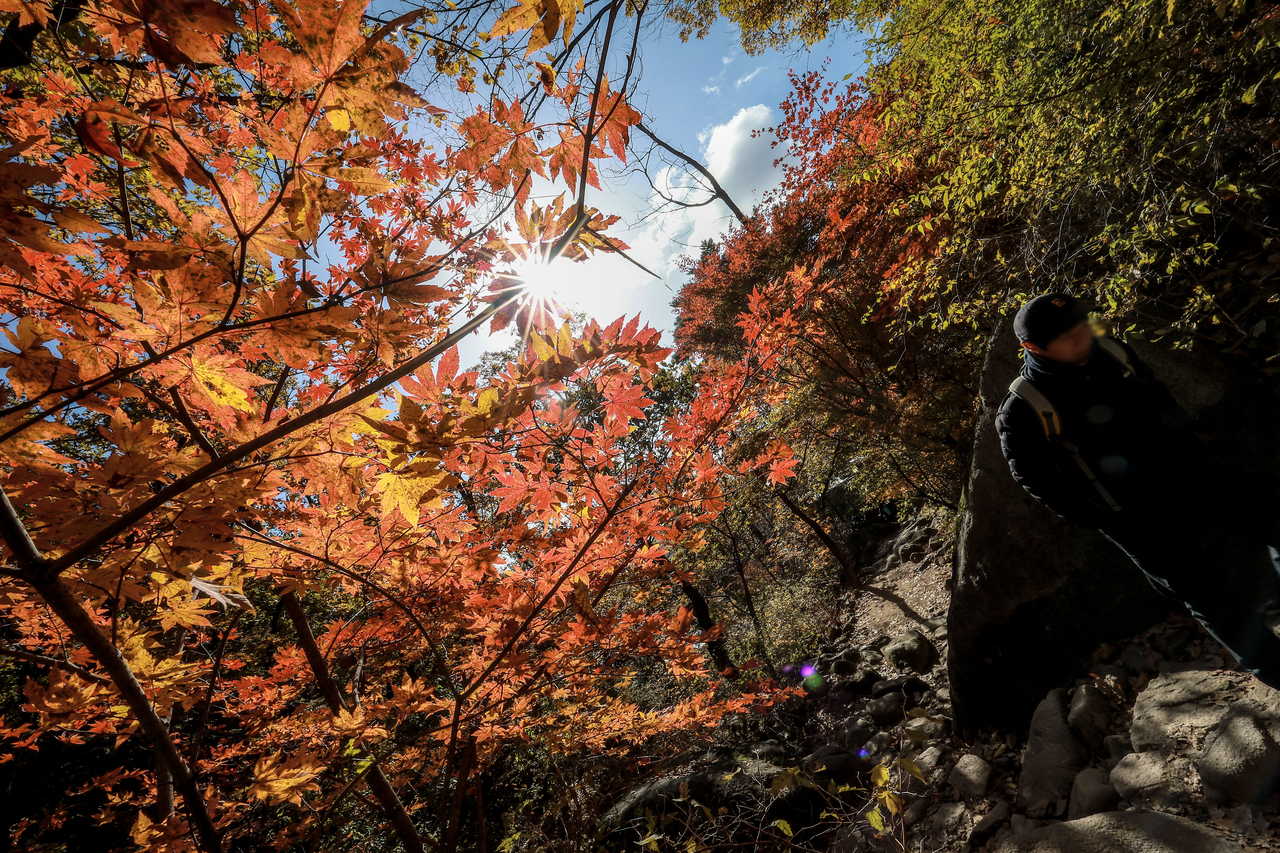
Deeper exploration of life in Korea
“The hiking boom also aligns with a shift in travel trends, as visitors to Korea look beyond landmark sightseeing and seek experiences rooted in local life, highlighted in Korea-related content,” Jeong explained.
Photos of international visitors enjoying gimbap at the summits of mountains frequently appear on social media, while online communities show posts from hikers looking for peers to share meals such as baeksuk (Korean chicken soup), acorn jelly or scallion pancakes with makgeolli after trekking.
These dishes, sold at clusters of restaurants near the starting points of hiking trails, have long been popular among Korean hikers. Even guided tours have emerged that combine trekking in local mountains with tasting the dishes, targeting foreign visitors curious about the hiking culture.
“Fan pilgrimages,” following in the footsteps of K-pop stars or entertainers, have also emerged as a strong motivator for hiking in Korea, as trails and valleys frequently appear in daily-life posts and variety shows featuring the idols.
The fans often take photos of photocards or dolls representing their idols at locations the stars have visited, and share them with other fans.
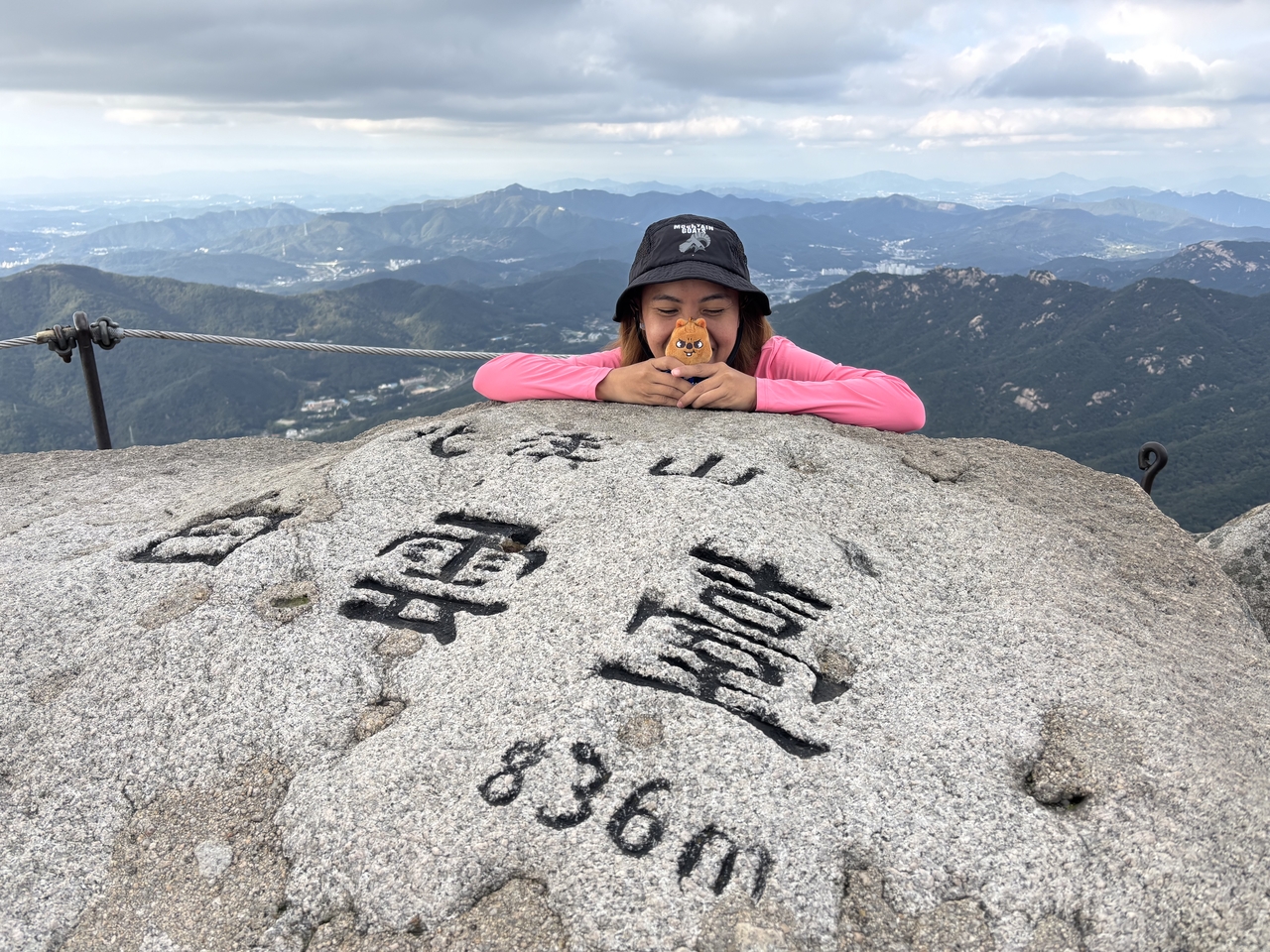
Melanie Hingpit from the Philippines, a fan of the K-pop group Stray Kids, hiked Bukhansan during her second visit to Korea in October. There, she ran into three other Stray Kids fans carrying stuffed dolls representing the band members’ characters.
The mountain has a stream in a valley where the boy group filmed a YouTube show while eating baeksuk.
“I kept searching for the exact filming location but couldn’t find it, so I ended up climbing all the way to the summit of Bukhansan instead,” said Hingpit. “It’s my own way of connecting my love for the mountains with my love for Stray Kids.”
The mountain is also popular with BTS fans, as members of the group have shared moments of hiking there. A forest named after BTS member Suga, created by fans to celebrate his birthday in 2023, has become another attraction for visitors to the mountain.
Policy push still finding its feet
Local governments are promoting hiking to attract foreign tourists, but these efforts are still in the early stages, with challenges in both satisfying current demand and generating greater interest.
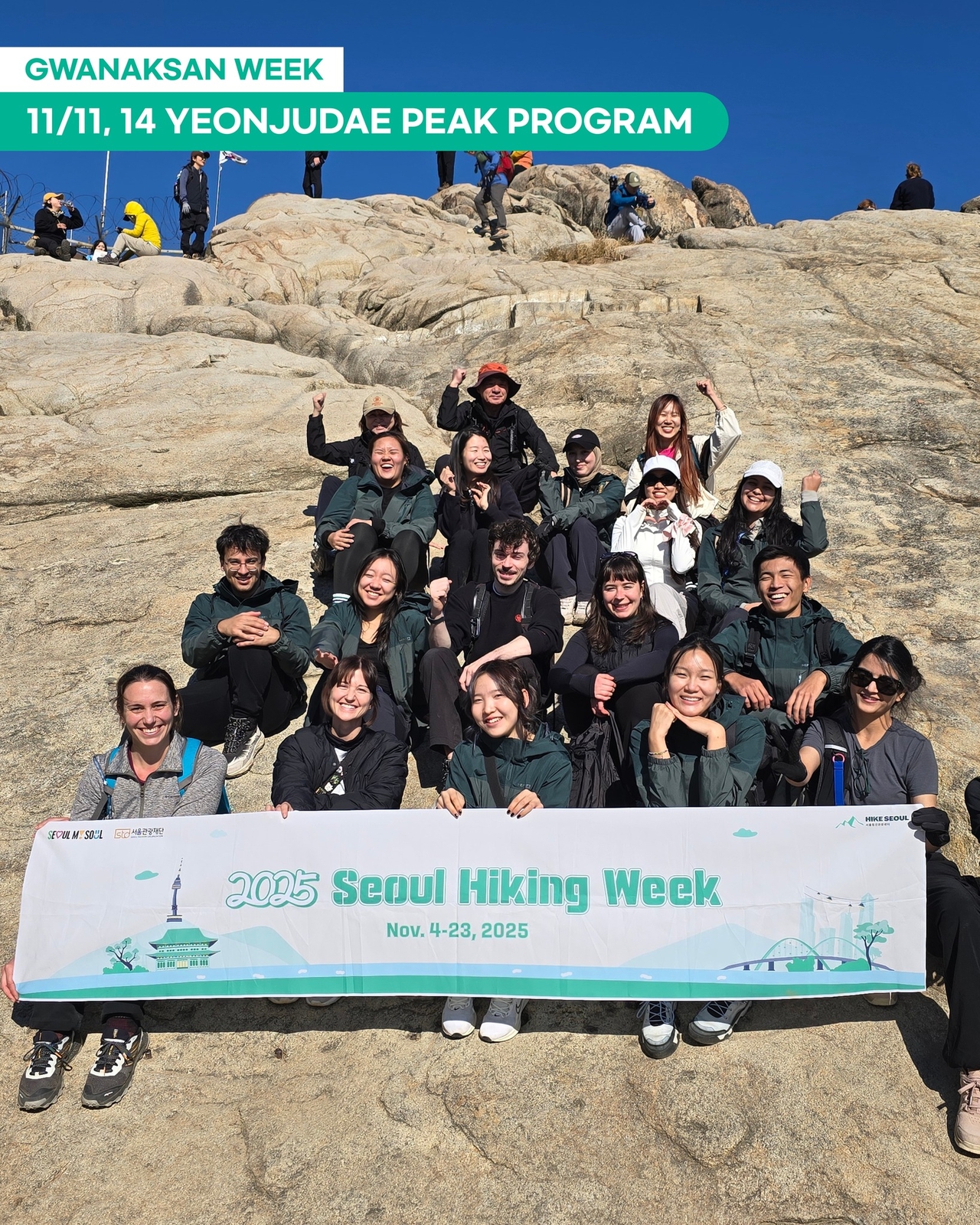
Seoul officially launched a new hiking tourism center on Gwanaksan in April, bringing the total number of centers in the city to three.
The centers offer trail information in Korean, English, Chinese and Japanese. They also organize group tours for both Korean and international visitors and lend hiking gear to foreign national hikers.
However, observations suggest that foreign-language guidance along the trails remains insufficient.
“I researched the hike beforehand, for safety reasons, as I was doing the hike solo. So I didn’t struggle much with the signage,” said Lari. “At one crossroads, though, I felt a bit unsure if the path I was going to was the one I wanted to go to. Some parts were with no signage, so I could feel unsure if it was ok to be there.”
Some sections of the Inwangsan trails in central Seoul, popular with international visitors due to their proximity to the city center, were seen blocked off with ropes and lacked clear guidance on Tuesday, making it difficult for hikers to find their way back to the city.
Experts say a long-term strategy is needed to establish hiking as a stable form of tourism, noting that the lack of promotion at the government level keeps hiking tourism in Korea confined to certain target groups.
“Adding themes to each mountain and creating challenge-type competitions could help boost interest in Korean mountains, such as offering souvenirs for reaching summits, which are not always easy to hike,” said Jeong.
“Such efforts should also be systematically promoted by the Korea Tourism Organization and overseas missions to let people know that Korea offers these experiences even before they arrive.”
forestjs@heraldcorp.com




![[Weekender] Are men with type B blood really womanizers?](jpg/20180726000649_03496.jpg)

![[Weekender] [K-School] From lobster to rose tteokbokki, Korean school food continues to evolve](jpg/20231207000820_03496.jpg)