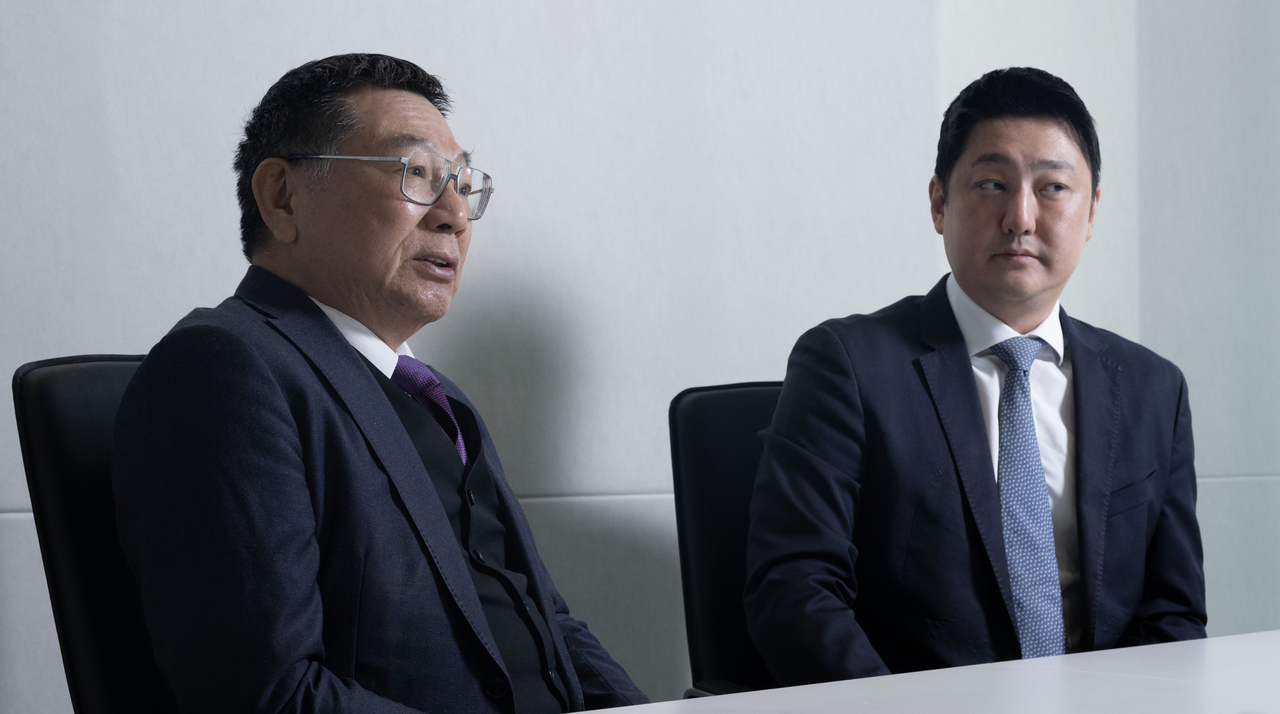
Despite the steep selloff in global chip and AI stocks that rattled markets this week, industry veterans Colley Hwang and Kim Sung-soo Eric laid out a rosy outlook, downplaying concerns of an “AI bubble” and predicting that the semiconductor “supercycle” will continue.
이번 주 글로벌 반도체 및 AI 주식의 급격한 매도세로 시장이 흔들렸음에도, 업계 베테랑 콜리 황과 김성수 에릭은 ‘AI 버블’ 우려를 일축하며 반도체 ‘슈퍼사이클’이 지속될 것이라는 낙관적인 전망을 내놨다.
“I think the concerns about an AI bubble come from not really understanding how much the technology is evolving right now,” Kim, CEO of Datacrunch Global, said during an interview with The Korea Herald in Seoul on Friday.
“AI 버블에 대한 우려는 현재 기술이 얼마나 빠르게 진화하고 있는지를 제대로 이해하지 못한 데서 비롯된다고 생각합니다.” 김성수 에릭 데이타크런치글로벌 대표는 8일 서울에서 열린 코리아헤럴드 인터뷰에서 이렇게 말했다.
“The current AI market is very primitive. Still we’re going to see things that we never imagined could really happen in a couple of years.”
“현재의 AI 시장은 아직 매우 초기 단계입니다. 하지만 앞으로 2~3년 안에 상상하지 못한 일들이 현실이 되는 것을 보게 될 것입니다.”
As an AI expert leading the AI strategy advisory service for multinational companies, Kim explained that the AI sector is where “duplicate investment” is being made.
글로벌 기업들을 대상으로 AI 전략 자문을 맡고 있는 그는 “AI 분야에서는 ‘중복 투자’가 활발히 일어나고 있다”고 설명했다.
“Every country needs their sovereign AI and wants to build their own data centers, just like the global big techs such as OpenAI and Google. So the investment in these efforts will be significant and will not slow down in a couple of years,” Kim said.
“모든 국가가 독자적인 AI 역량을 원하고, 오픈AI나 구글 같은 글로벌 빅테크 기업처럼 자체 데이터센터를 구축하려 합니다. 따라서 이 분야에 대한 투자는 향후 몇 년간 결코 둔화되지 않을 것입니다.”
Kim is also an AI business strategy professor at the Graduate School of Business at Yonsei University, Keio Business School and at National Taiwan University.
김 대표는 연세대, 게이오대, 대만국립대 비즈니스스쿨에서 AI 비즈니스 전략을 강의하고 있다.
Colley Hwang, founder and chair of Digitimes, a leading semiconductor and electronics market intelligence outlet based in Taiwan, said the AI field also holds immense potential in high performance computing — extending beyond mobile phones to high-value sectors such as electric vehicles, drones and robotics.
대만에 본사를 둔 반도체·전자산업 전문지 디지타임즈의 창립자이자 회장인 콜리 황은 “AI는 모바일을 넘어 전기차, 드론, 로봇 등 고부가가치 산업으로 확장되는 고성능 컴퓨팅 분야에서 막대한 잠재력을 지닌다”고 말했다.
“I don’t have any hesitation about the demands for the future, because we need more computing power,” Hwang said. “Semiconductors and AI will be a driving force for economy, digital economy and even quantum economy in the future.”
“향후 수요에 대해서는 전혀 의심이 없습니다. 우리는 더 많은 컴퓨팅 파워가 필요하기 때문이죠. 반도체와 AI는 앞으로 경제, 디지털 경제, 나아가 양자 경제의 핵심 동력이 될 것입니다.”
“So it is not an AI bubble we should be worried about, we need to think about who could win the games and who will win the majority of the market opportunities in the coming decades.”
“따라서 우리가 걱정해야 할 것은 AI 버블이 아니라, 앞으로 수십 년 동안 누가 시장의 승자가 될지입니다.”
Kim also noted that there are new devices being developed, such as augmented glasses, and the metaverse, so new demands will constantly emerge.
김 대표는 “AR 안경이나 메타버스 같은 새로운 디바이스 개발이 이어지고 있어, 새로운 수요는 꾸준히 생겨날 것”이라고 덧붙였다.
Global investors have recently turned cautious on AI-related equities amid warnings from major investment banks that valuations had run ahead of earnings.
최근 주요 투자은행들이 ‘AI 기업들의 가치가 실적을 앞질렀다’는 경고를 내놓으면서, 글로벌 투자자들은 AI 관련 주식에 신중한 태도를 보이고 있다.
Korea’s benchmark Kospi, which had surged on AI momentum through the second half of the year, fell nearly 6 percent on Wednesday and ended the week 1.8 percent lower at 3,953.76.
AI 모멘텀에 힘입어 하반기 상승세를 이어가던 코스피는 수요일 하루에만 약 6% 급락했고, 주간 기준으로 1.8% 하락한 3,953.76에 마감했다.
The pullback followed declines in US megacap chip and software firms amid concerns about overvaluation and potential restrictions on advanced semiconductor exports to China.
이 같은 조정은 고평가 우려와 중국으로의 첨단 반도체 수출 제한 가능성으로 미국 대형 반도체·소프트웨어 기업들이 하락한 영향으로 나타났다.
Tips
1. selloff: (대량) 매도, 급락
2. primitive: 원시적인, 초기 단계의
3. duplicate investment: 중복 투자
4. sovereign: 자주적인, 독립된
5. immense: 막대한, 엄청난
6. driving force: 원동력, 추진력
7. augmented: 확장된, 증강된
8. pullback: (주가 등의) 조정, 하락세
khnews@heraldcorp.com