What began as Jin Ok-dong’s shared-growth experiment now becomes one of Korea’s fastest-rising delivery platforms, reshaping fees, competition
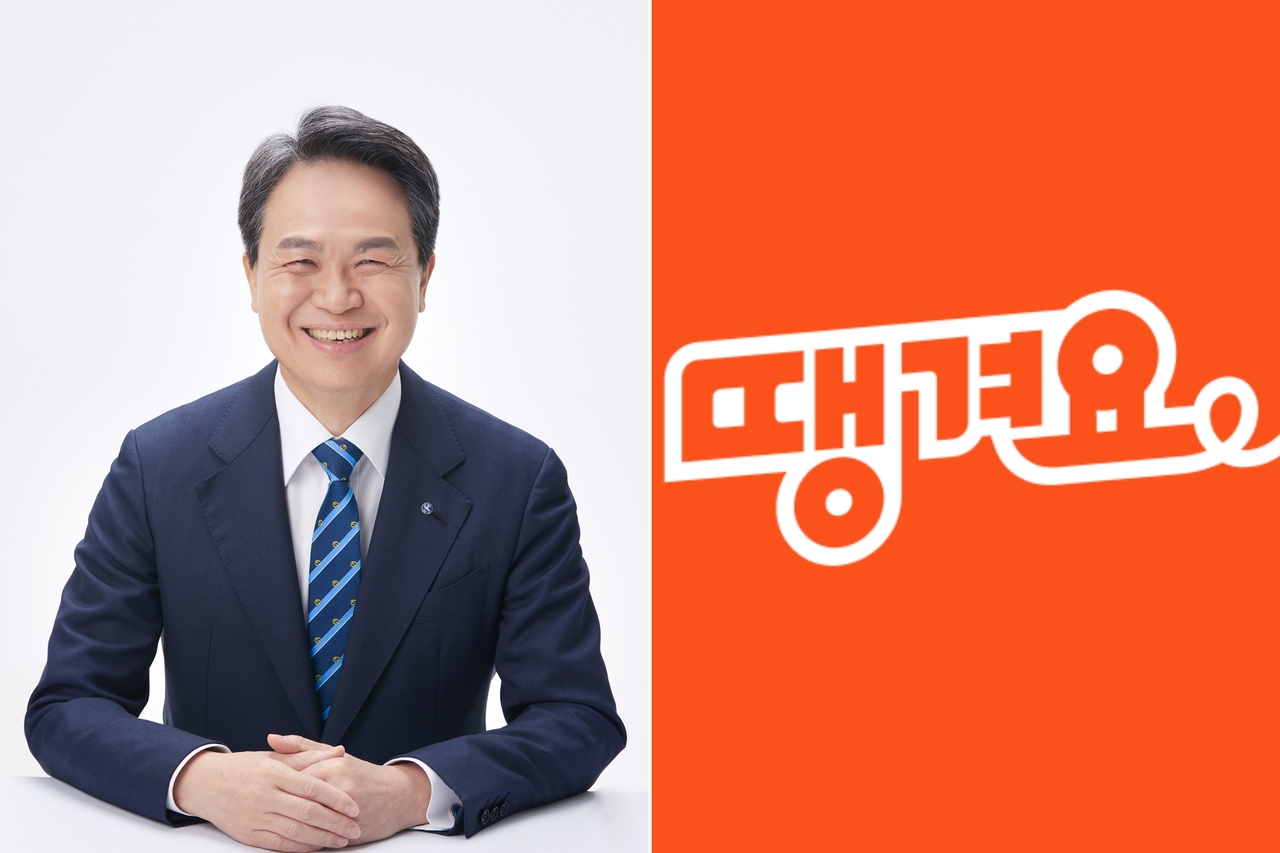
When Shinhan Financial Group Chair Jin Ok-dong sent his bank into the food delivery business, critics scoffed at the idea of a financial giant chasing chicken-and-beer orders. But four years later, Ddangyo — Shinhan’s ultra-low-fee delivery app — is rewriting the rules of competition in Korea’s delivery market and reframing how a bank can wield its power for social impact.
For Jin, Ddangyo was never about chasing tech multiples. It was a business expression of his long-held principle that finance should function not just as a conduit for capital but as infrastructure for shared growth.
“I believe the future of our society lies in shared growth,” Jin said at Ddangyo’s launch in January 2022, when he headed the banking unit. “Food is central to our lives, and Shinhan Bank will stand with customers, small merchants and delivery drivers so all can benefit from ‘good consumption.’”
Turning philosophy into product
Ddangyo translated that message into business rather than charity. While mainstream delivery apps charge restaurants about 10 percent per order, Shinhan set Ddangyo’s fee at 2 percent. It also scrapped advertising charges and offered same-day settlement, giving small restaurants faster cash flow.
Ddangyo’s debut coincided with frustration over rising delivery fees and the dominance of a few major platforms. Vendors accused market leaders of excessive pricing power, and regulators ramped up scrutiny, creating space for a cheaper alternative. In that climate, a finance-backed service with structurally lower commissions and no pressure to chase platform-level profits carried both political and commercial appeal.
Early adoption was gradual yet notable, with Ddangyo rising to become Korea’s fourth-largest delivery platform in less than three years.
Momentum accelerated this year, helped by government spending coupons and Shinhan’s expanding municipal partnerships. Public-sector collaboration had been part of Ddangyo’s strategy from the outset, but its reach widened after Seoul named it the city’s sole government-backed delivery platform in March. By November, cumulative order value had reached 570 billion won ($388 million), up from 110 billion won at the end of 2024. Users climbed to 7.5 million and participating restaurants neared 300,000, increases of roughly 80 percent and 50 percent on-year.
Industry observers say Ddangyo’s effect on the market’s heavy oligopoly remains limited but notable. Baemin and Coupang Eats retain about 80 percent of the market, yet Ddangyo is pressuring the tier below. Seoul city data show its nationwide share at 7.5 percent in October, narrowing the gap with No. 3 player Yogiyo at 10.9 percent. Monthly active users, a key engagement gauge, tripled from about 1 million late last year to 3.5 million, while Yogiyo fell by a quarter to 4.4 million.
Banking on shared growth
Analysts note Ddangyo was never built to win the delivery wars. Instead, it supports Shinhan’s broader push into merchant-focused financial services. By positioning itself as a partner to small businesses rather than simply a lender, the bank deepens client stickiness as competition for SME customers intensifies.
Such efforts carry weight in Korea, where major lenders face recurring criticism that they earn “easy money” from domestic interest income. Critics say rising housing and equity prices lift loan demand even without marketing, allowing banks to reap unearned gains by virtue of their licenses. Record profits have fueled calls for windfall taxes and heightened pressure to demonstrate greater social value.
For Shinhan, Ddangyo became a market-based answer. Rather than launching temporary programs, the firm backed a model that leverages its capital strength to shift pricing dynamics in a sector directly tied to household spending and small-business viability.
Some experts say Ddangyo’s significance could grow if its footprint expands.
“If the platform eventually reaches the scale of a major delivery app, then its role as a shared-growth model could become far more meaningful,” said Hwang Yong-sik, professor of business administration at Sejong University.
But Hwang cautioned that such initiatives cannot substitute for core responsibilities. “Real shared growth comes from lowering the barriers to finance for ordinary people and small merchants, through affordable lending and easing regulatory hurdles,” he said, noting that lower platform fees alone are insufficient.
He also urged a balanced view of banks’ profit structures, discouraging excessive criticisms that push lenders toward symbolic projects at the expense of strengthening their core. “Over the past two decades, Korean banks have worked hard to build capital strength and financial stability, and that foundation is what ultimately enables them to support small businesses at all."
jwc@heraldcorp.com