Samsung’s first triple-folding smartphone delivers 10-inch tablet experience in pocketable form, but innovative design brings new weight, usability trade-offs
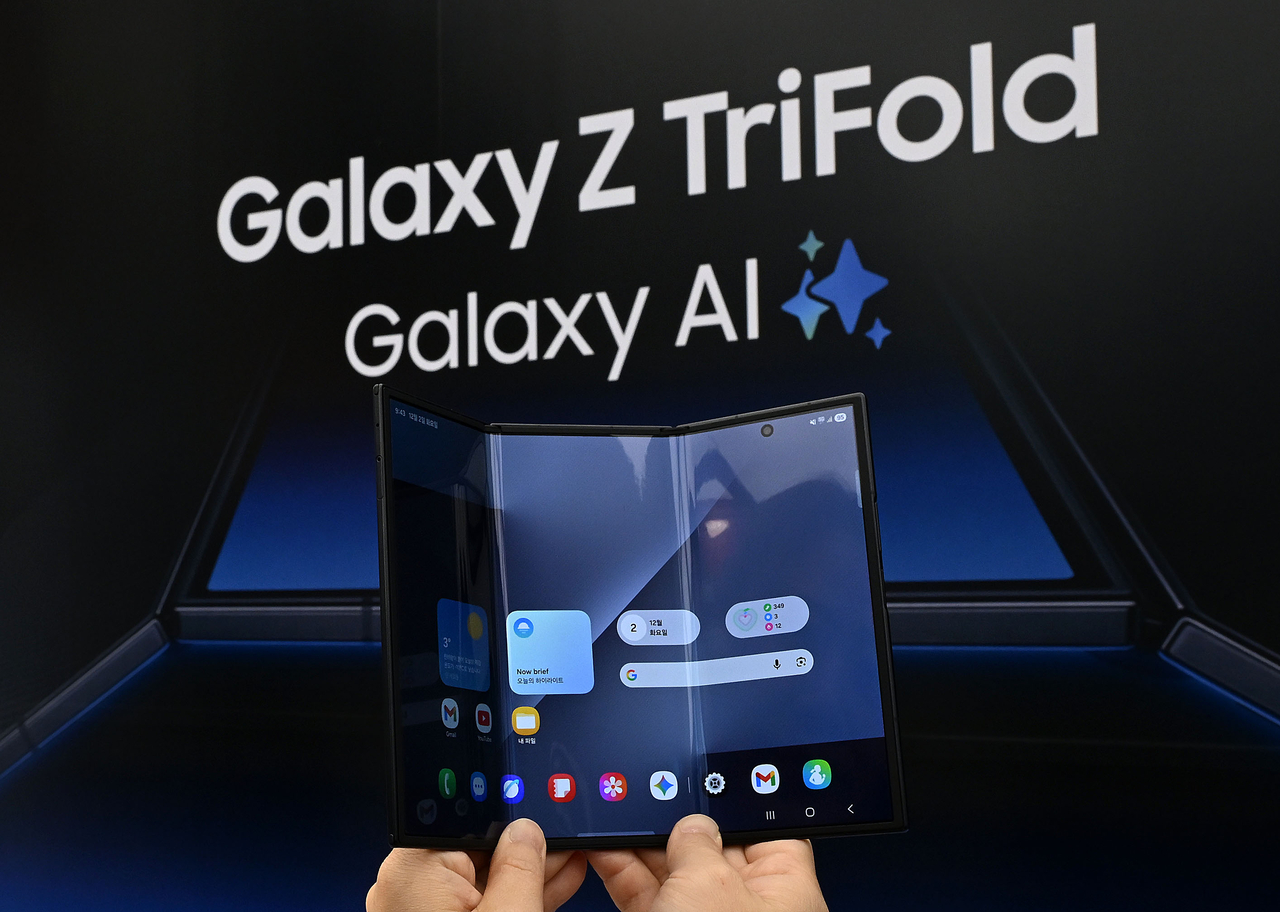
Samsung Electronics has pushed the foldables category into uncharted territory with the Galaxy Z TriFold — its first triple-folding smartphone and arguably its boldest experiment in mobile design since the original Galaxy Fold. Unveiled Tuesday, the device blurs the line between phone and tablet more seamlessly than any Samsung model to date, signaling a new phase in form factor evolution.
Fully unfolded, the Galaxy Z TriFold reveals a 10-inch display, delivering a viewing experience comparable to a conventional tablet. Folded in twice along its G-shaped hinges, it transforms into a compact 6.5-inch bar-type device — mirroring the portability of the Galaxy Z Fold7.
Despite its intricate dual-hinge architecture, the TriFold boasts an impressively slim profile. It measures 12.9 millimeters folded and just 3.9 mm at its thinnest point when unfolded — the slimmest design in the Galaxy Fold lineup to date. For comparison, the Galaxy Z Fold6 measured 12.1 mm folded, while the Fold5 was 13.4 mm. Achieving such compactness in a double-fold design underscores Samsung’s engineering sophistication.
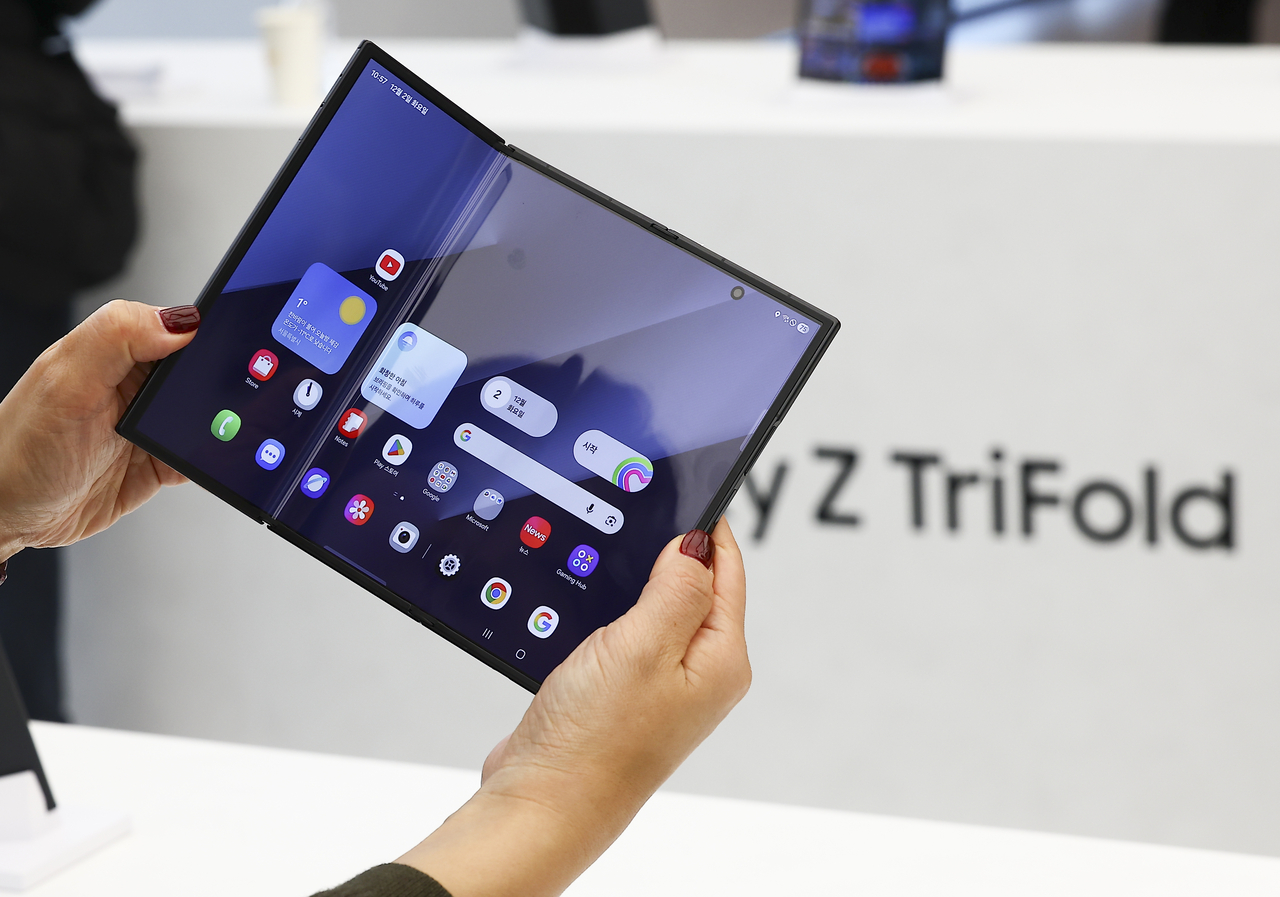
Given its three-panel configuration, weight concerns were inevitable. At 309 grams, the device is heavier than other Samsung flagships — the Fold7 weighs 215 grams, the Fold6 239 grams and the Galaxy S25 Ultra 218 grams. The weight difference is evident when compared side by side, making extended one-handed use less feasible.
Nevertheless, the benefits of a large, immersive display are substantial. The unfolded screen delivers a near-tablet experience, while its ability to fold into a smartphone-sized body offers a level of versatility that conventional tablets cannot match.
The TriFold particularly excels in productivity. Supporting up to three apps simultaneously, it elevates Samsung’s multitasking capabilities. The layout resembles three smartphone screens aligned horizontally — providing sufficient space for document editing, video conferencing and messaging — all at once.
Entertainment experiences are equally impressive. Video on YouTube or other streaming services feels seamless, enhanced by an OLED display and a refresh rate of 120 hertz that ensures smooth playback and vivid imagery. Gaming also benefits from the expansive and responsive display with a high frame rate.
Still, the novel design presents trade-offs. The bezels surrounding the screen are noticeably thicker — a result of structural requirements for repeated folding.
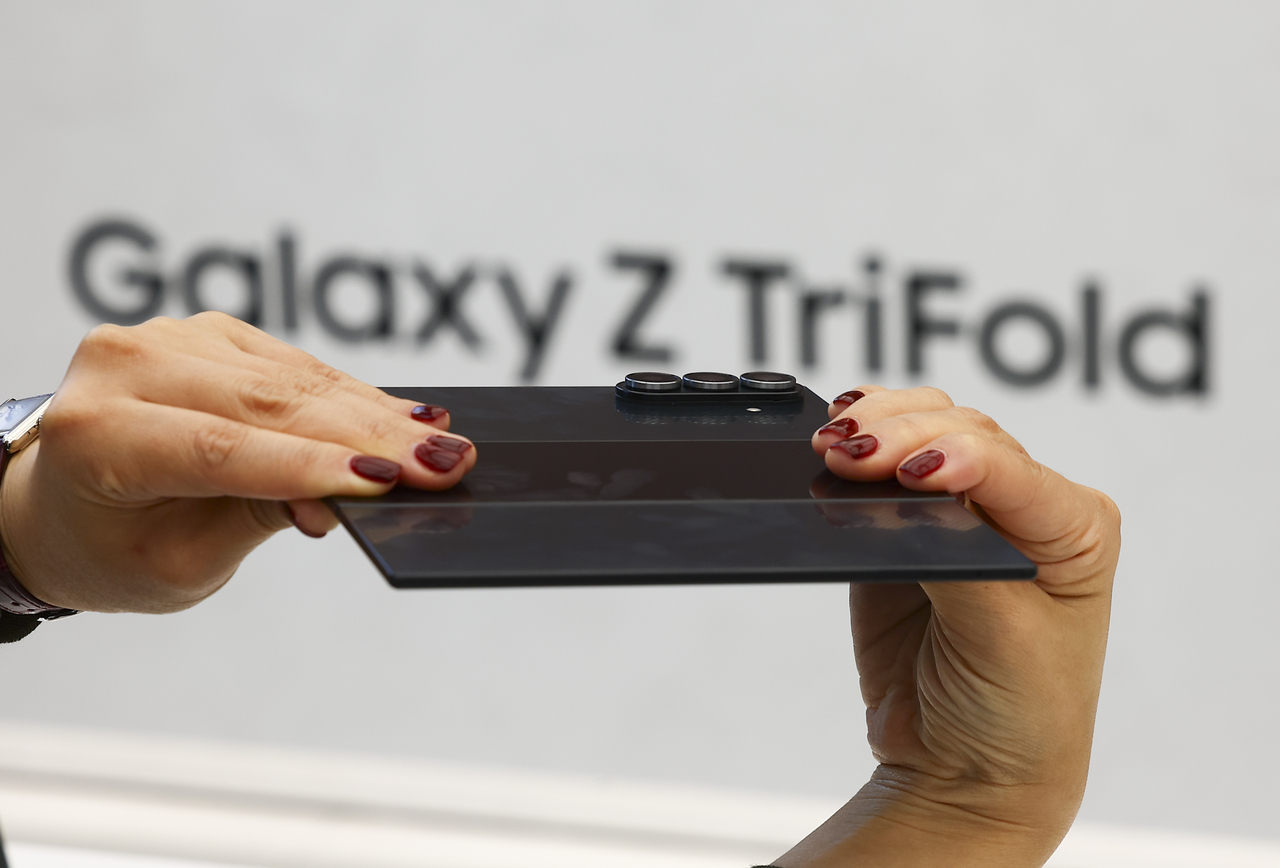
In terms of usability, the device introduces a new learning curve. Unlike previous foldables that can be opened with one hand, the TriFold’s G-shaped hinge necessitates a two-handed operation. Furthermore, the folding sequence is fixed — right panel first, then left — and reversing the order triggers a system alert. While likely essential to the hardware design, this may be vexing to some users, particularly those accustomed to more intuitive folding motions.
Pricing remains a barrier to widespread adoption. The Galaxy Z TriFold retails at 3.59 million won ($2,440), positioning it in the ultrapremium segment of the smartphone market.
However, viewed against competitors, Samsung’s pricing appears calculated. Huawei’s trifold model, released earlier this year, starts at 17,999 yuan ($2,550) and goes up to 21,999 yuan for higher-capacity versions. The comparison suggests Samsung aims to pair technical leadership with strategic pricing.
In essence, the Galaxy Z TriFold represents more than just a new iteration in foldables — it redefines the boundaries of mobile design. While it demands certain compromises, it delivers a compelling blend of productivity, portability and innovation for users seeking a next-generation device.
yeeun@heraldcorp.com